


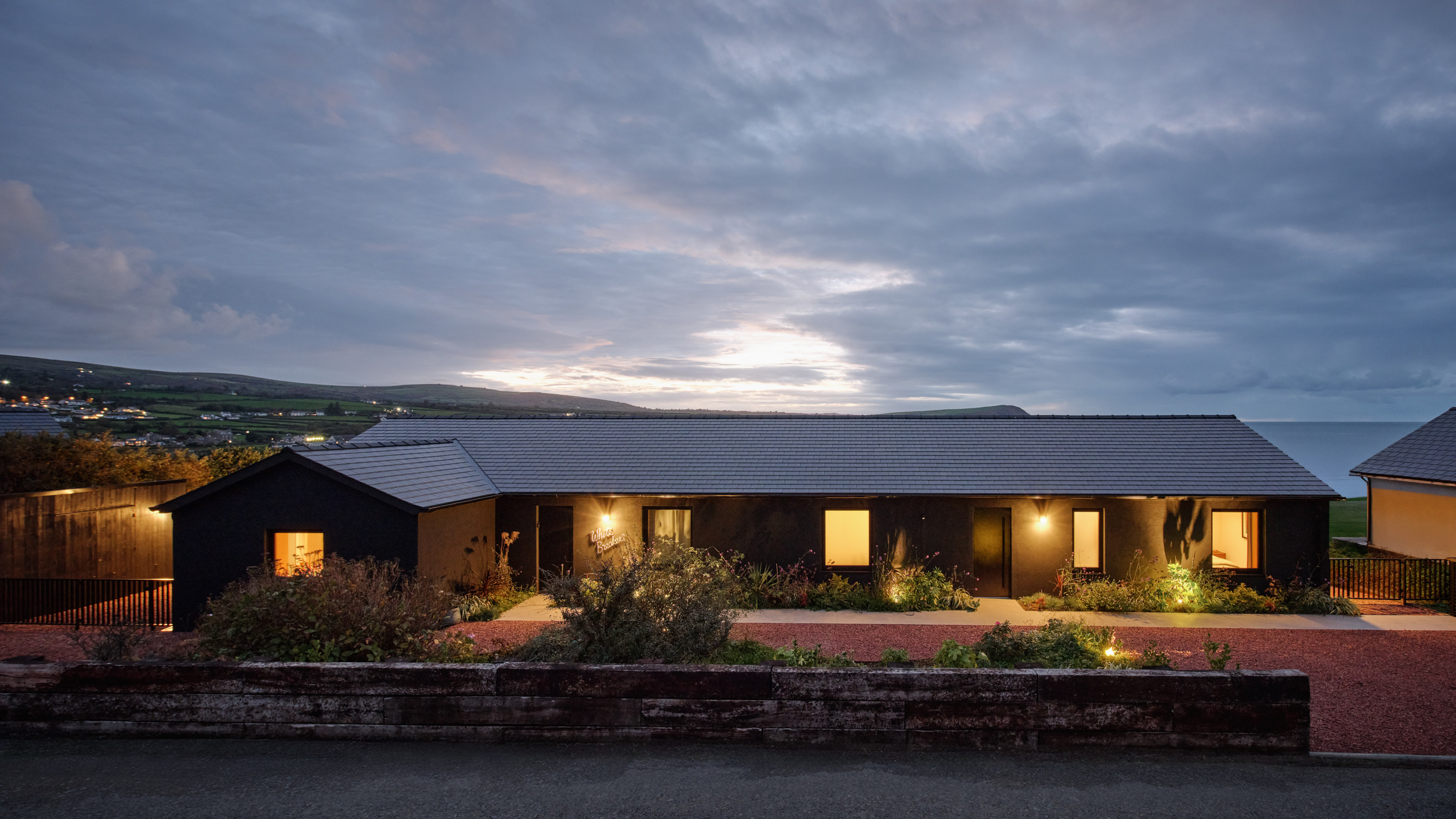
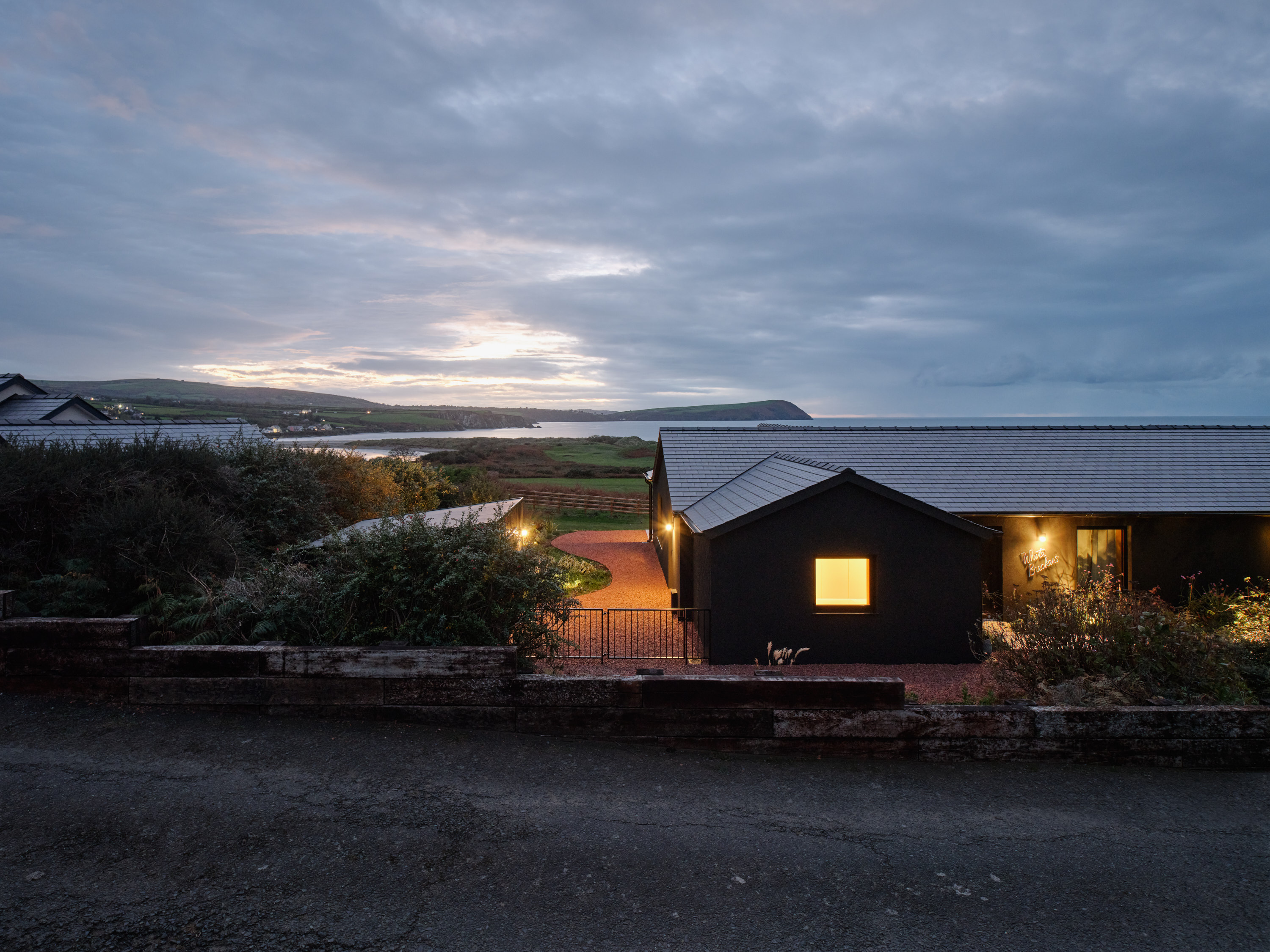
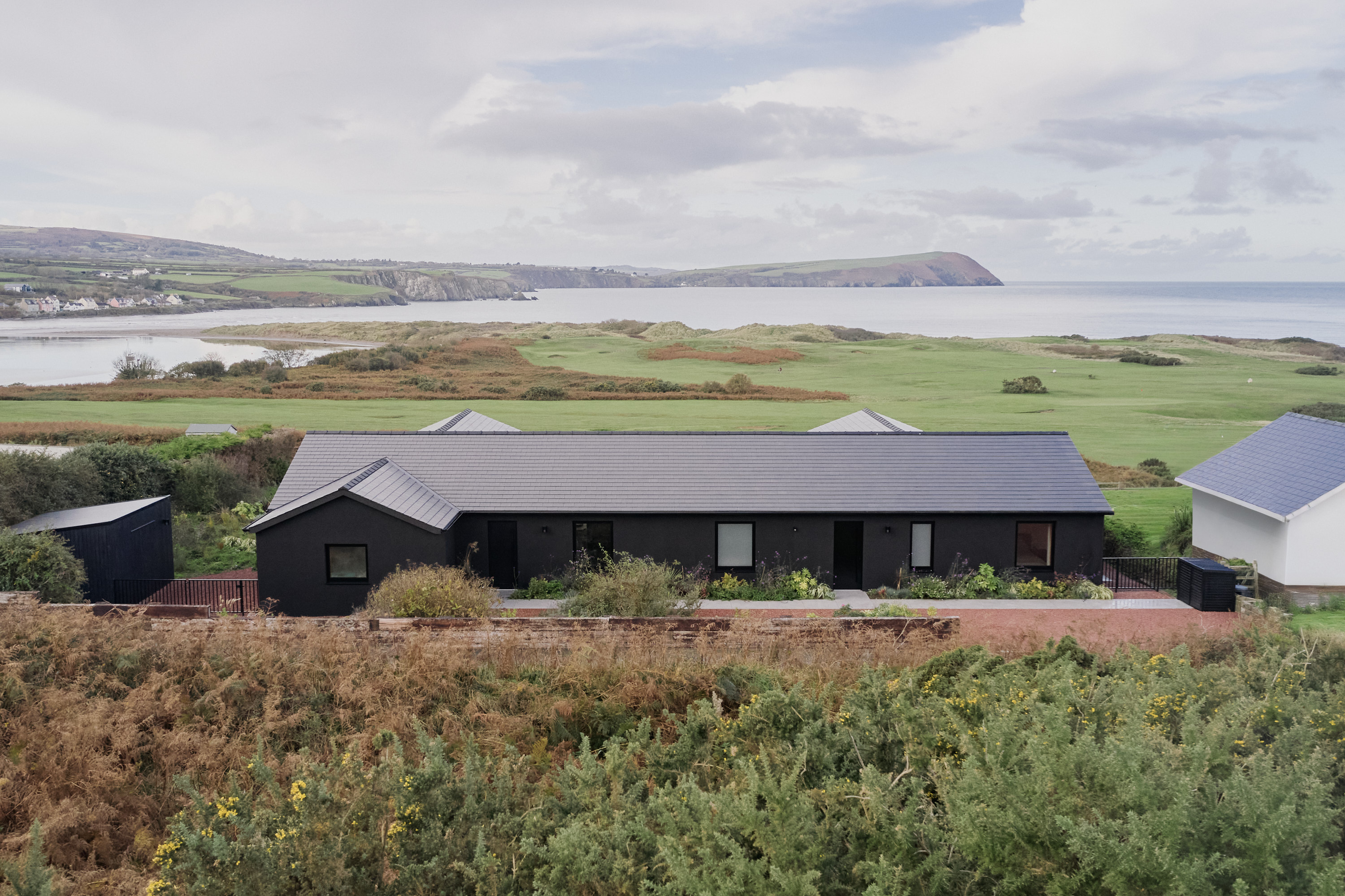
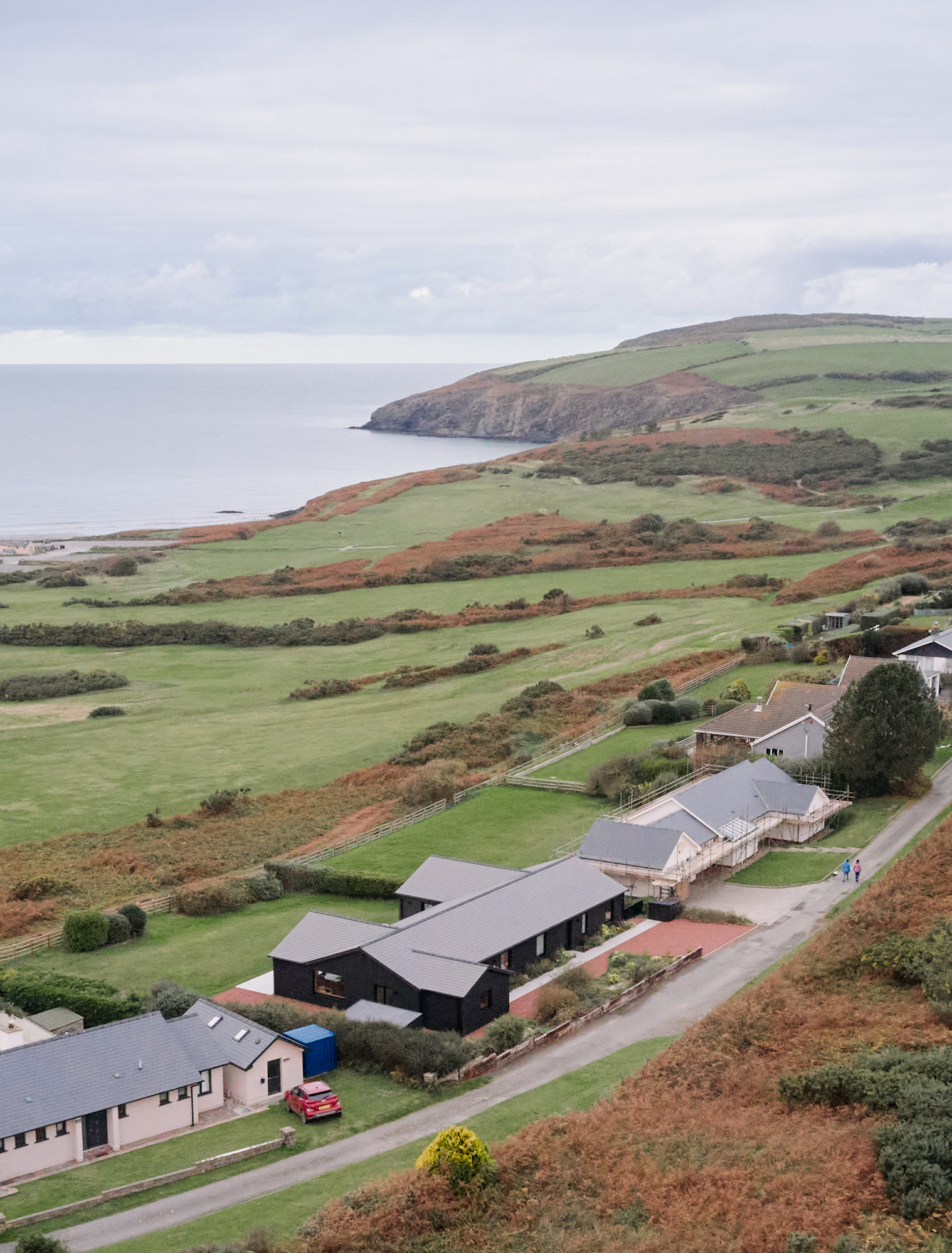
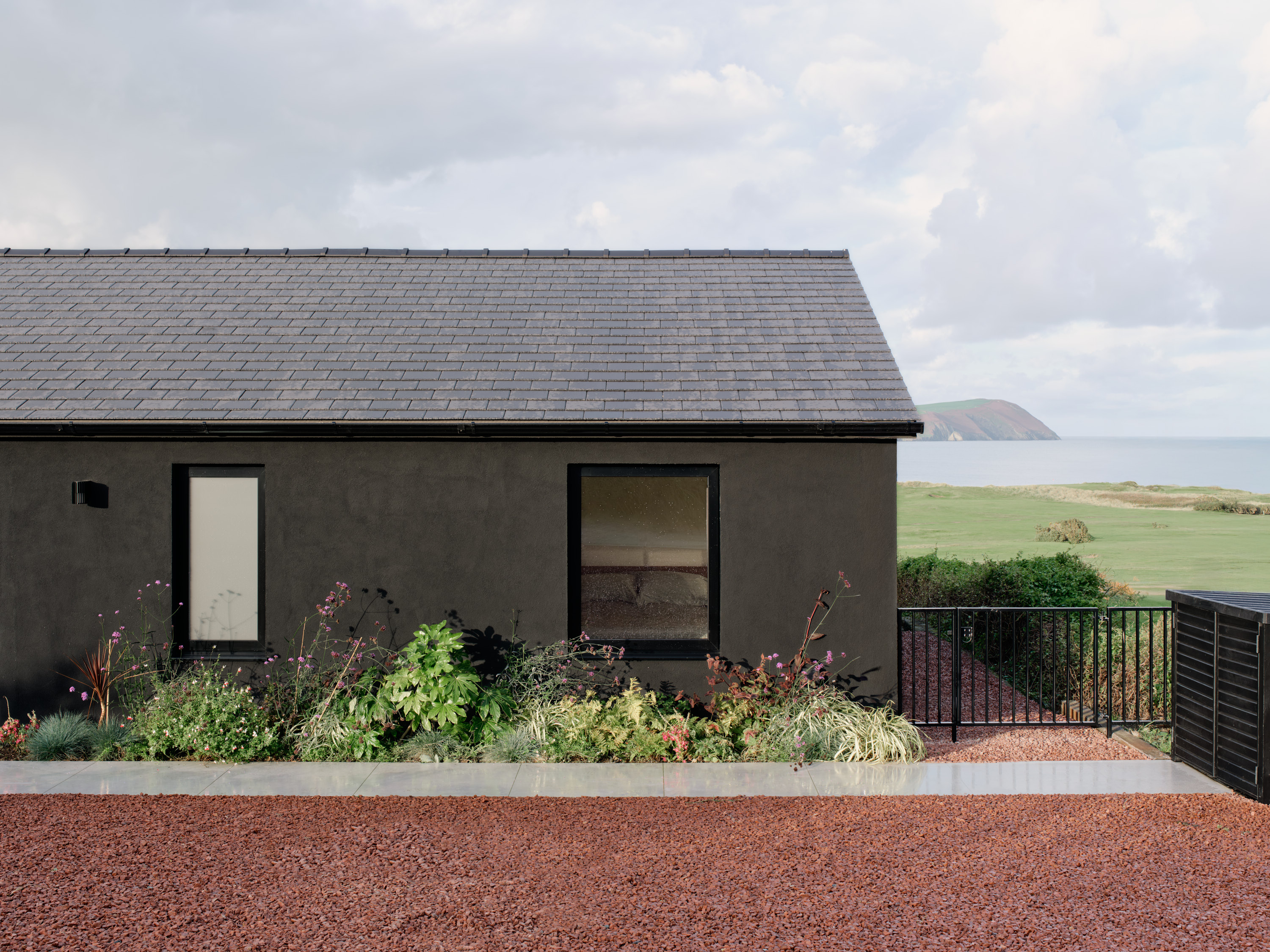
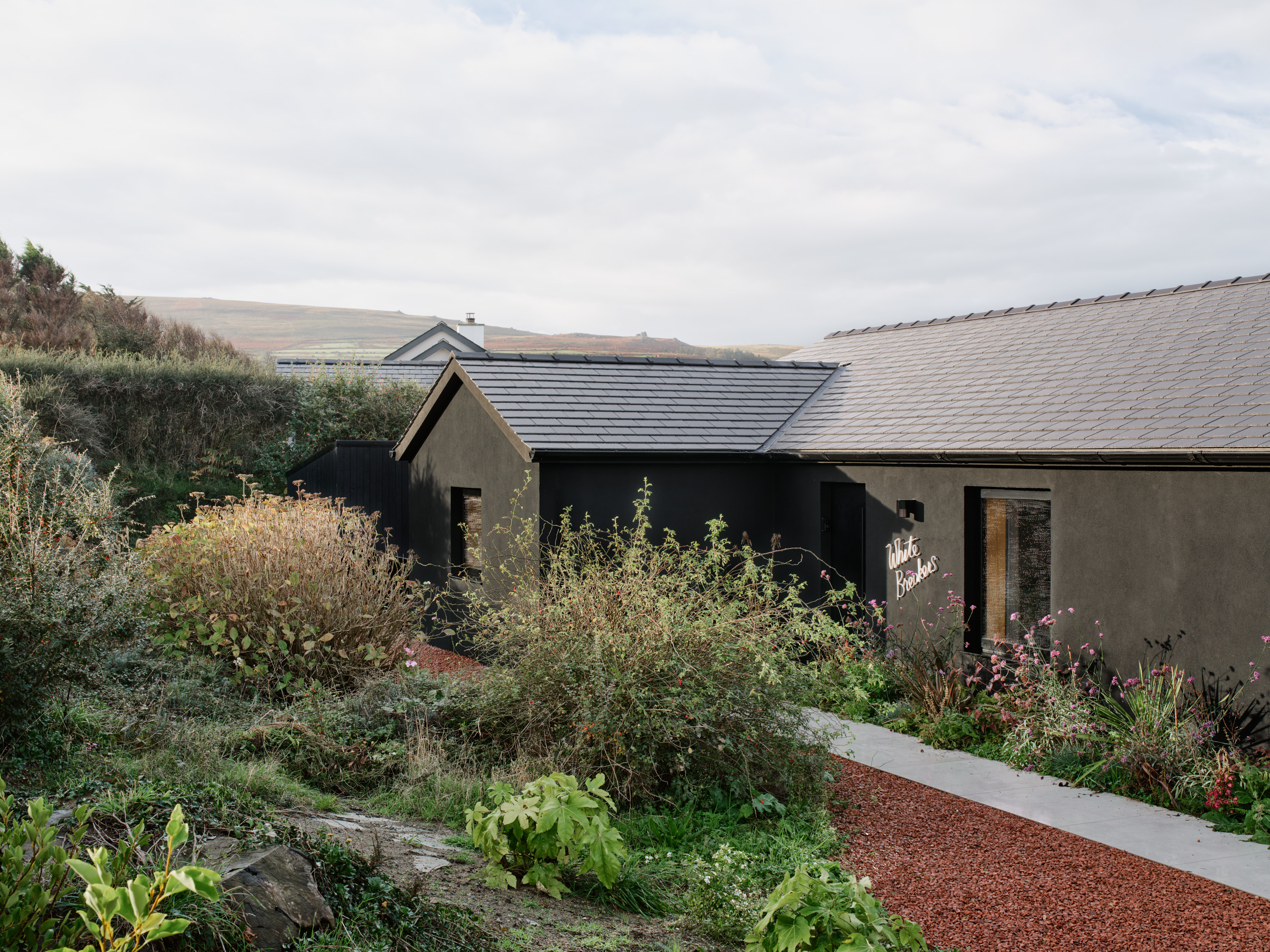
White Breakers is a black clad, retrofitted, single storey property, located within a dark skies section of the Pembrokeshire Coast National Park, facing the Irish Sea. The refurbishment of the family home sought to radically improve the energy efficiency of the original house and prioritise a low carbon footprint throughout both construction and eventual habitation. The house was also carefully designed to be as stealthy as possible - and nature friendly, including the installation of a bat box and swift box to the ends of the building.
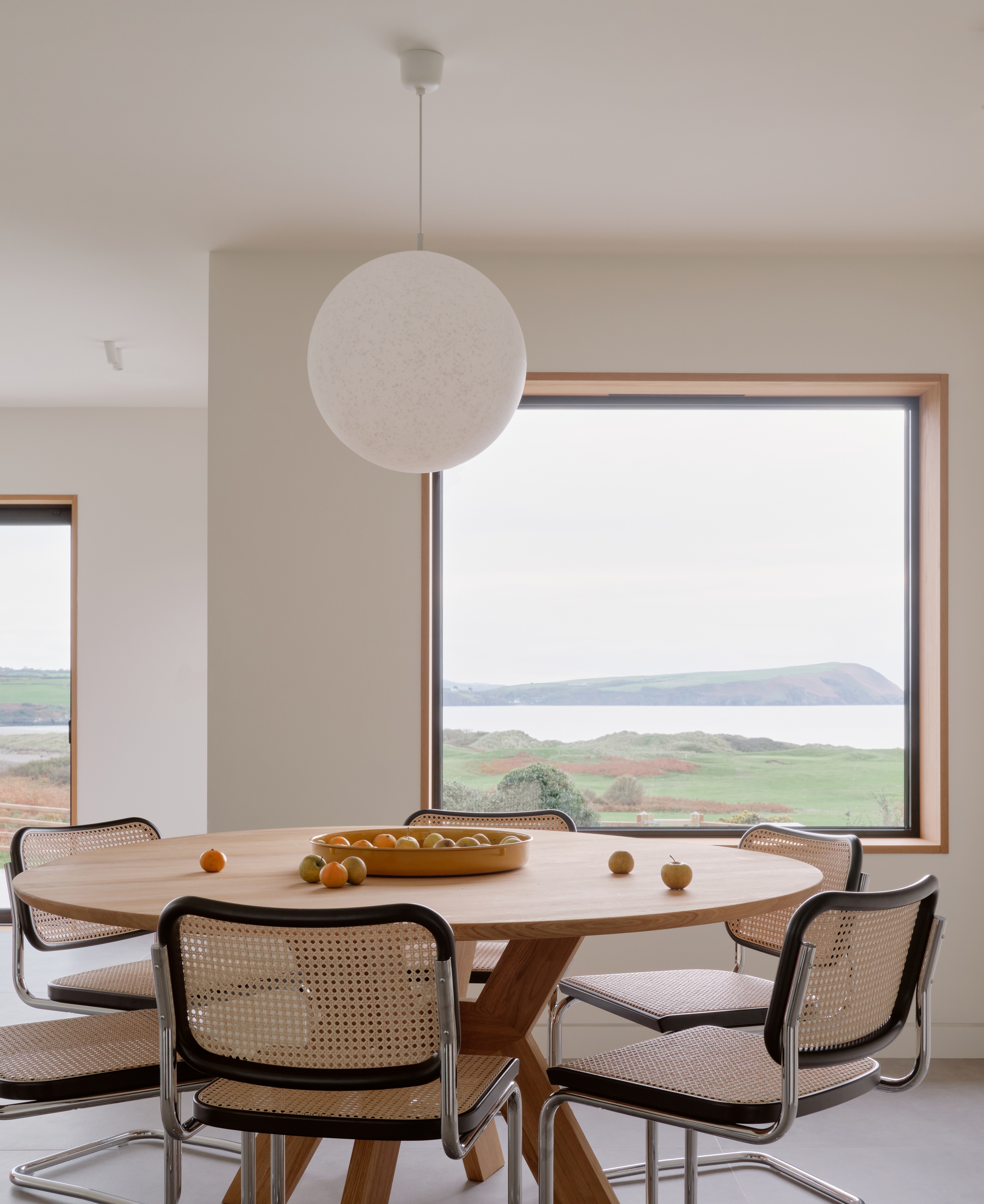
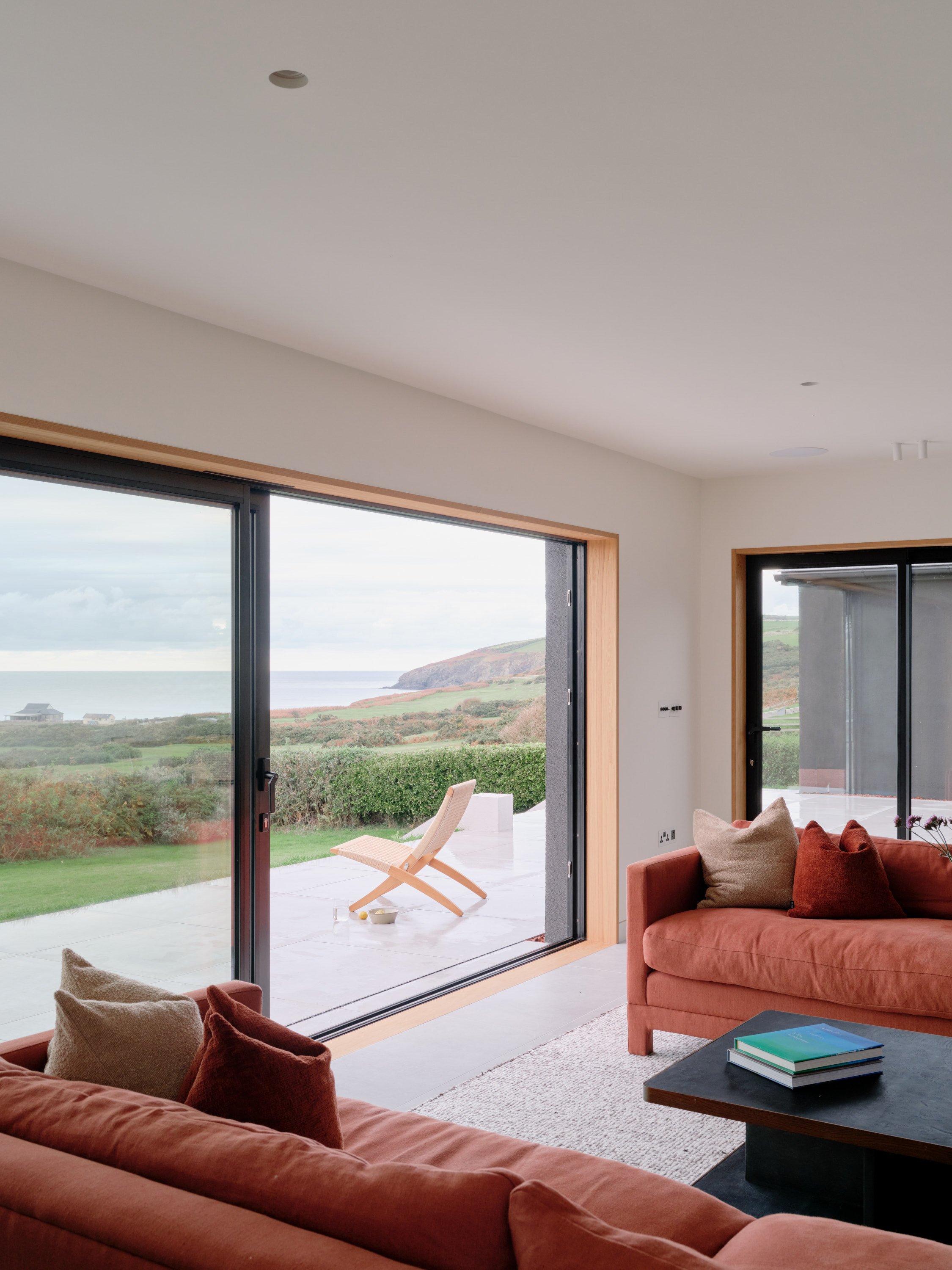
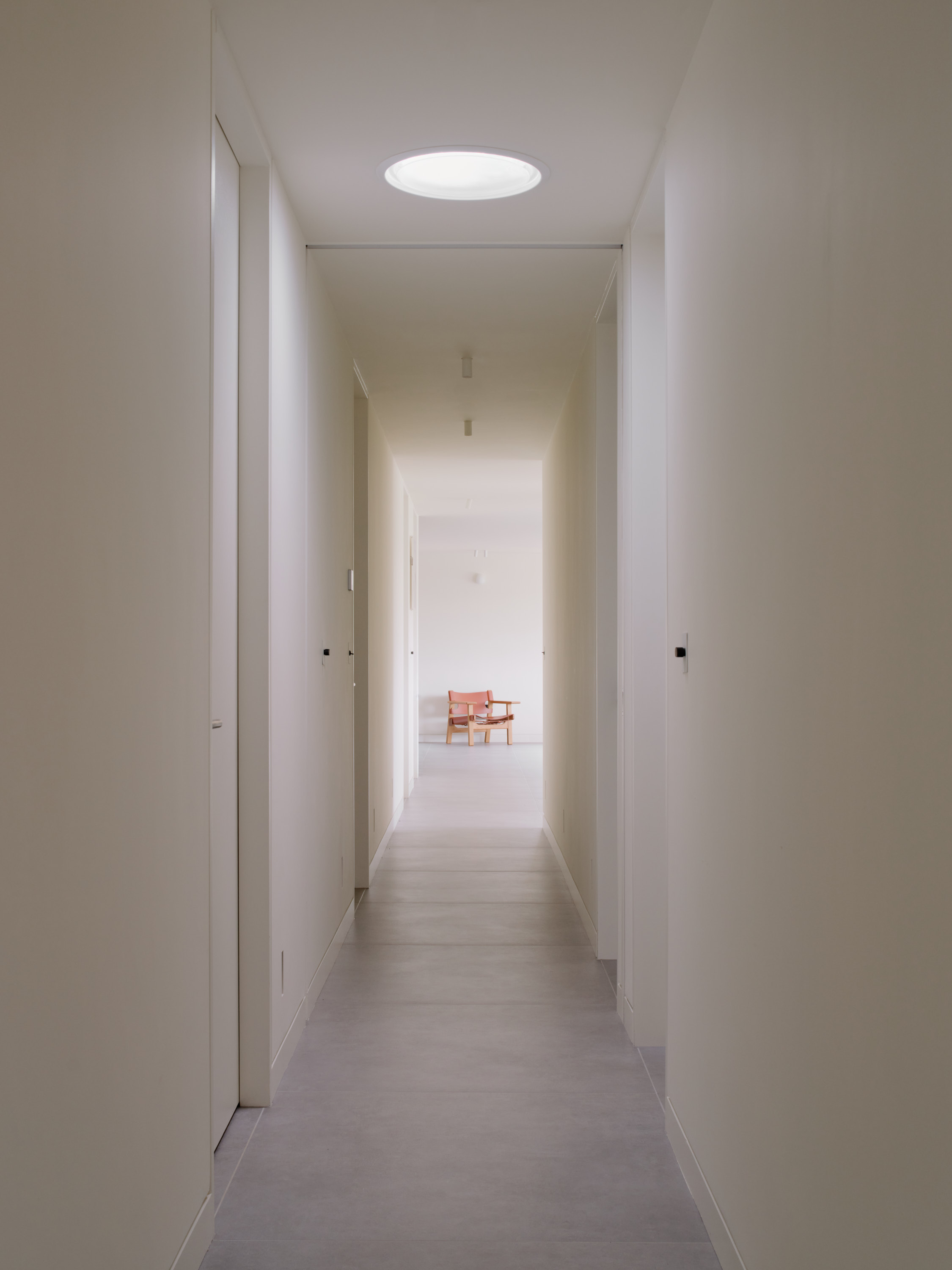
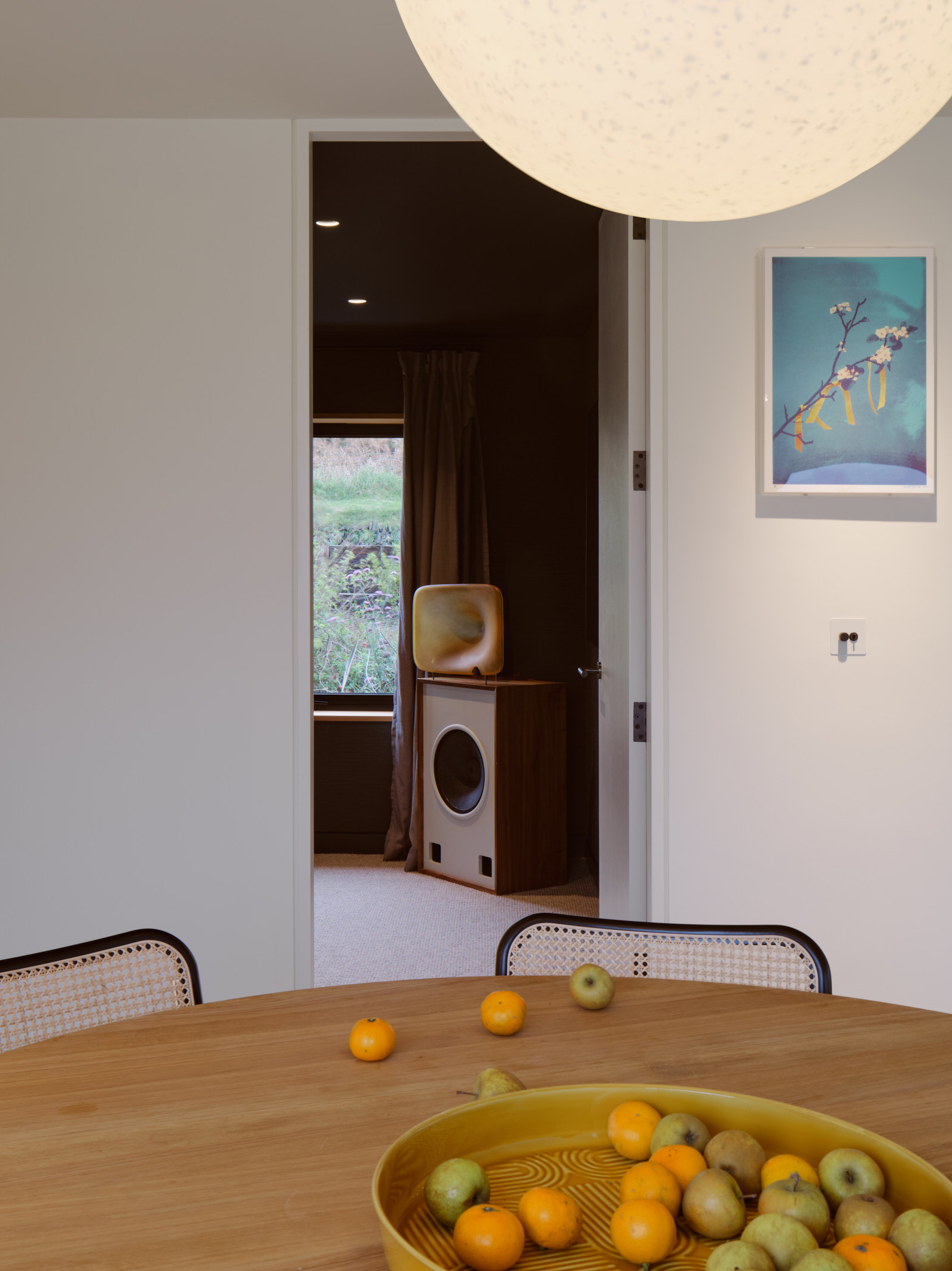
The interior of the home is the absolute opposite in treatment: light, white and bright with expansive, sliding, timber-framed glazing, opening onto a rear terrace and panoramic sea views, offering maximum internal and external connectivity. The muted and calm interior serves to accentuate the commanding landscape surrounding the building, bringing its inhabitants closer to experiencing the sometimes harsh but always breathtaking climatic conditions that the site experiences.
The project client couple are a world-renowned electronic musician and his partner, who works in the theatre. The family’s main home in London’s Notting Hill was Unknown Works’ first completed project in 2016. Having long holidayed in the Pembrokeshire area, the family had a long-term vision of finding a coastal home to spend longer periods of time there. A suitable property was eventually located on a sea-facing road on the estuary mouth of the River Nevern. The area’s fantastic views and sunsets, comparable to those of St Ives, has long-since made it a popular spot for holidaymakers and homeowners alike.
The existing property was ‘a bit of a Frankenstein building’, according to Unknown Works Director Kaowen Ho. ‘It was typically energy inefficient, like so many properties of its era, built with ad hoc extensions and very little thought given to the lifecycle of the building or how it might be used in the future, let alone sustainability or biodiversity. The house also showed signs of water ingress, thermal bridging and damp, amongst other critical construction flaws, whilst the interior was a warren of small spaces with no sensible layout or flow.’
Unknown Works kept the entire footprint in place as a retrofit principle to ensure as much retained carbon as possible on the project. Significant thermal insulation with new external cladding in a black silicone render now takes the walls out to meet the roof eaves, preventing both heat loss from the inside as well as protecting the interior from over-heating, with the internal temperature now rarely dropping naturally to below 14 or 15 degrees with little to no mechanical heating needed. The roof has been re-clad in black composite slate, maximising material longevity and weather resilience, given UK coastal properties are always so susceptible to the elements.
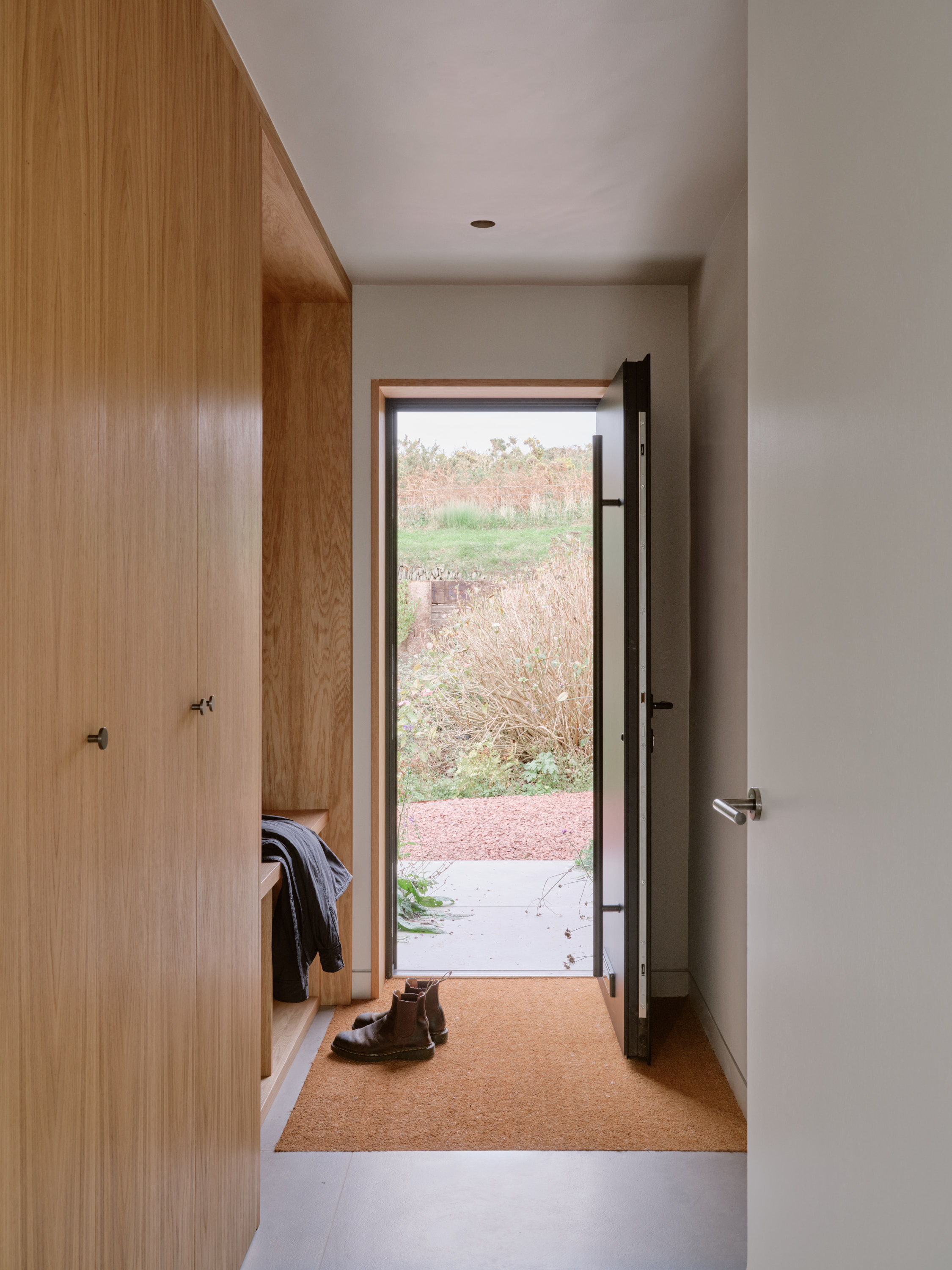
Externally, a red-pink gravel has been used for the pathways, serving both as a playful contrast to the black composite and creating a visual link with the soft but textured interior palette, which includes terracotta, fluted glass, natural stone and crown-cut timber joinery. Unknown Works worked with the client to create the garden’s soft landscaping, with planting right up to the building, whilst old railway sleepers form a low wall to the access-only road outside, where traffic levels are low and infrequent. The existing rear terrace, which faces the sea, has been completely resurfaced. The house also features a utility entrance to make sure sand from the beach, along with wetsuits and boards, can be easily dispensed with prior to entering the house.
‘Overall, this is a stealthy, subtle and restrained design’ Kaowen Ho added, ‘with the low-slung black, even brutal, exterior giving way to a very soft and bright interior, offering the warmth and welcome of a proper family home.’
The Design Process
Architect and Lead Design Unknown Works
Structural engineer Float Structures
Contractor D&O Construction
Photographer Henry Woide