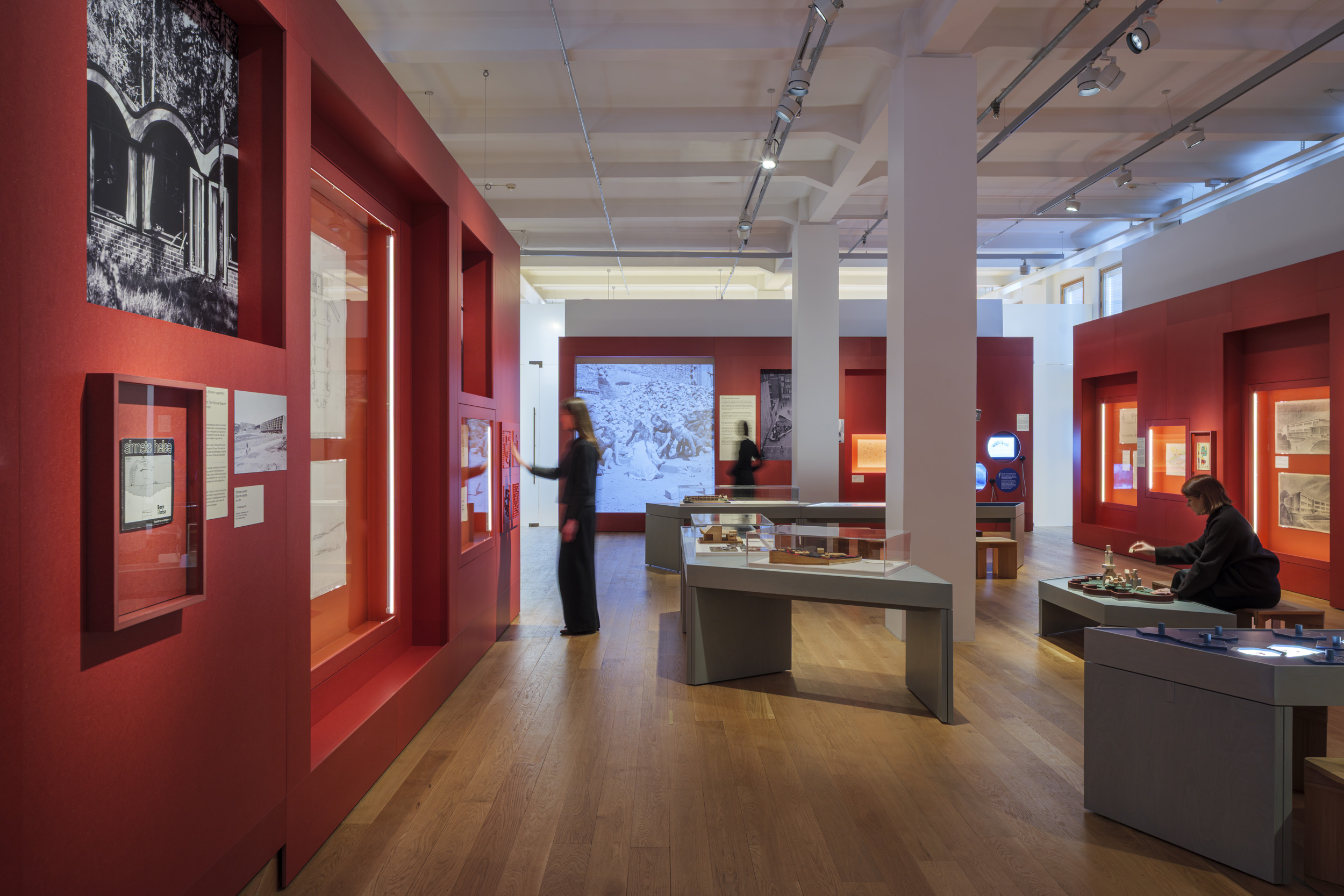
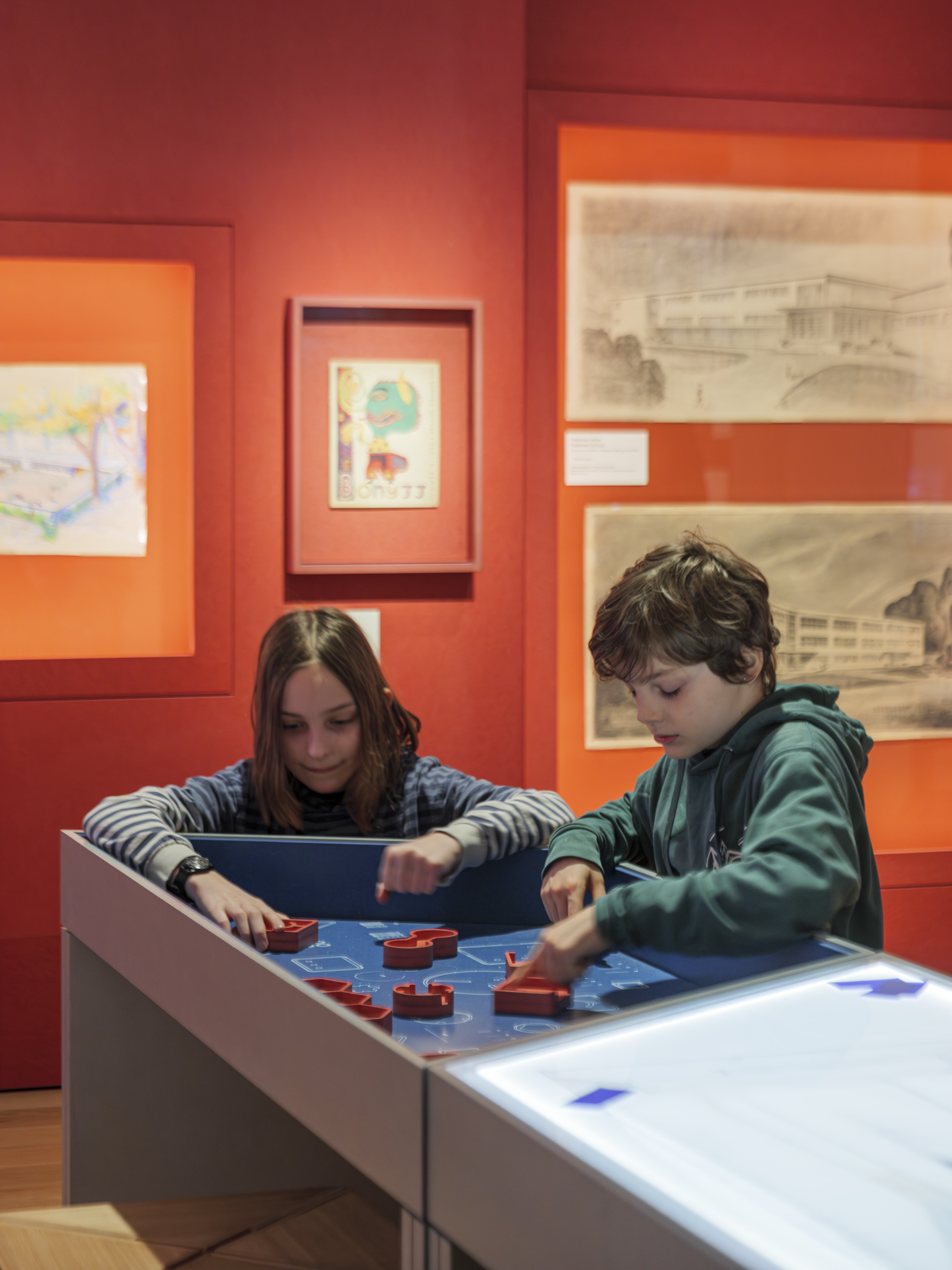
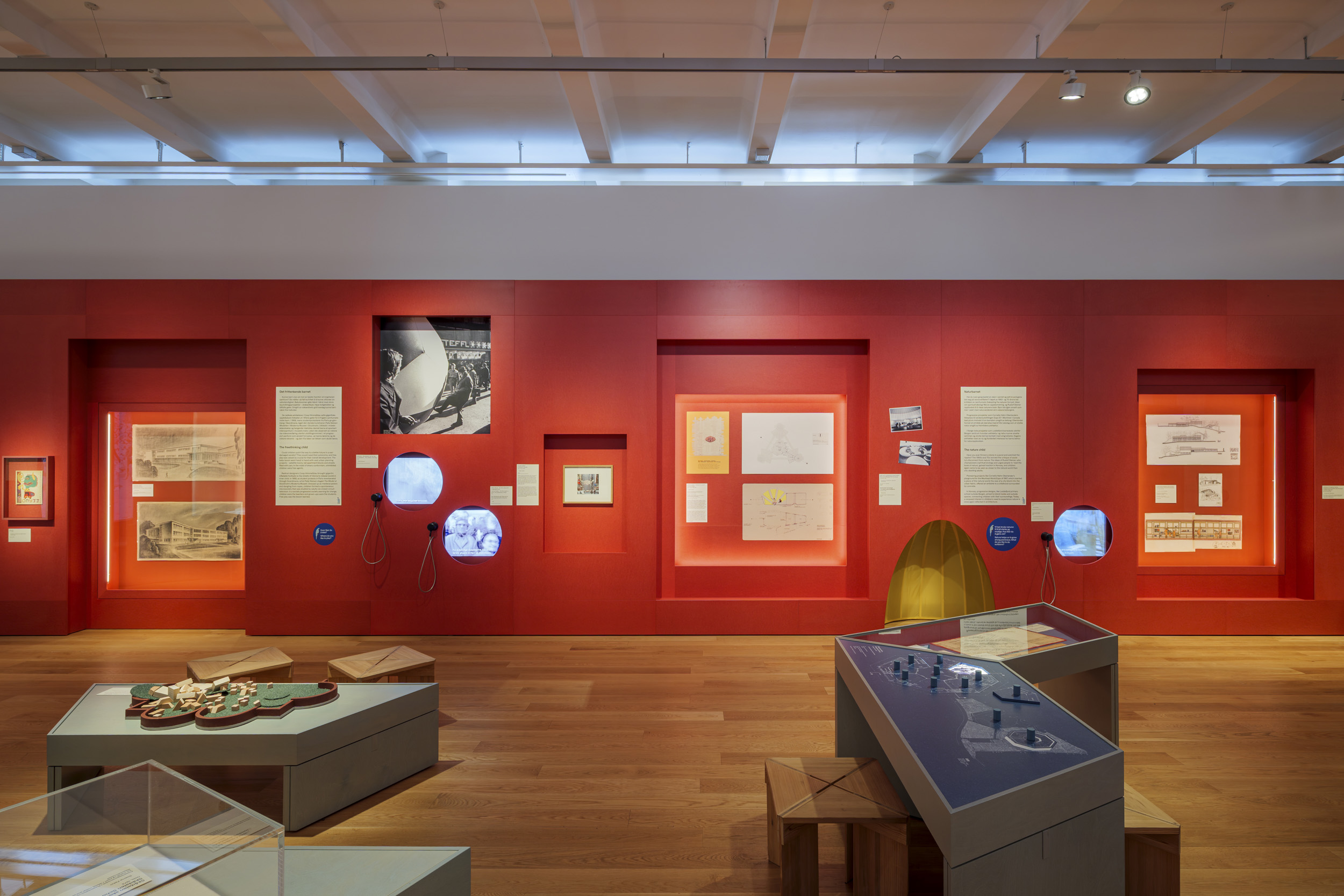
Nissen Richards Studio has designed BOOM! - an exhibition exploring the impact of the post-war baby boom on Norwegian architecture for the National Museum - Architecture in Oslo. The exhibition, which runs till 9 August, is the first to open at the museum since it closed for refurbishment in 2023.
Background:
From 1940 to 1970, Norway experienced one of its biggest demographic shifts in modern times: the baby boom. The modern welfare state put children centre stage, whilst new urban plans and housing developments were designed with children in mind. Architecture was seen as an important tool for shaping and educating the citizens of the future. For many architects, designing for children was a new challenge and an opportunity to innovate and experiment, responding to the utopian post-war concept of ‘the radical child’ - free-spirited and malleable with no boundaries to their natural creativity.
Exhibition Aims:
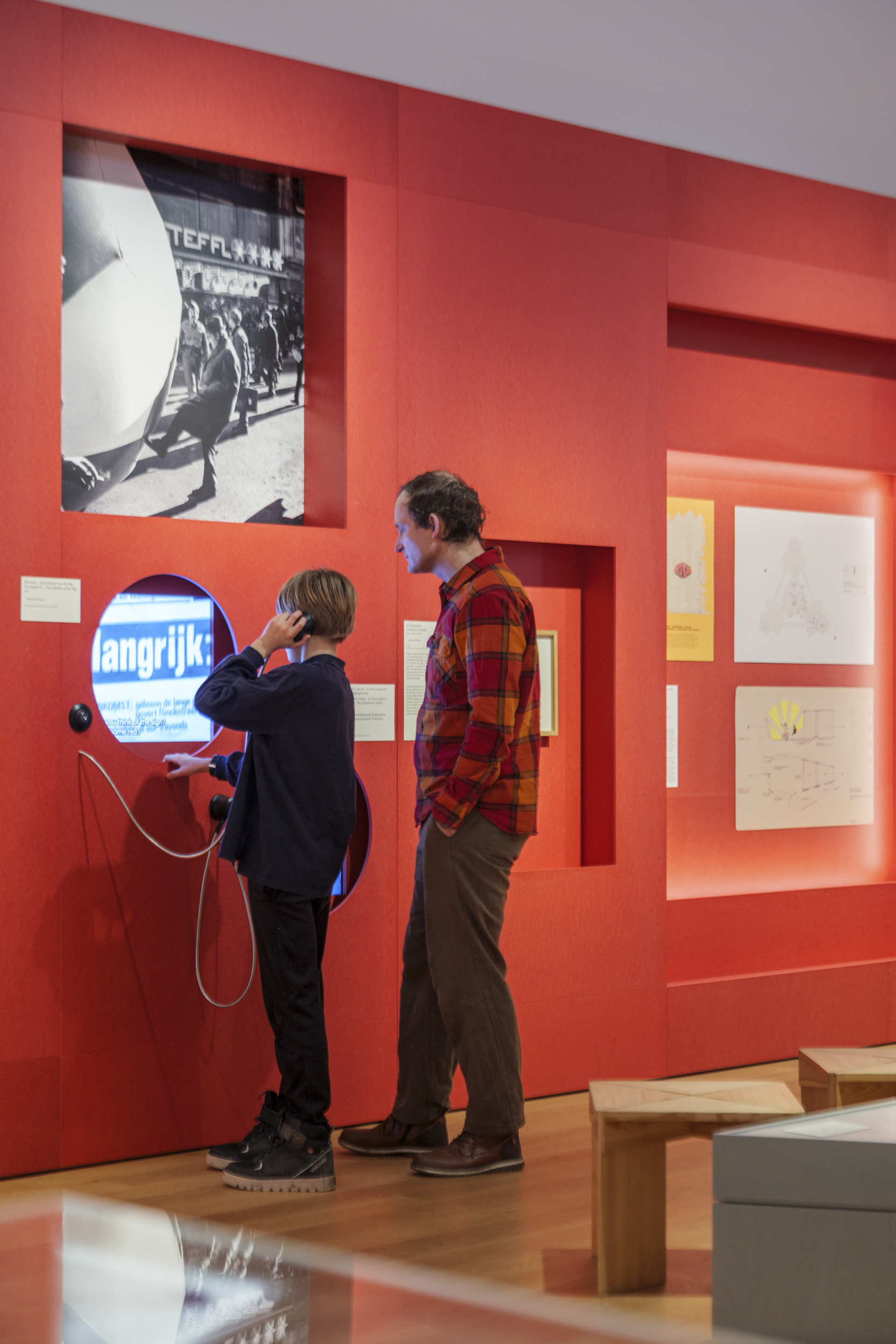
With a target audience of children aged 7-to-9 (as well as accompanying adults), the exhibition aims to bring complex architectural concepts into focus for younger children. Using embedded audio-visual content and a series of physical interactives, everyday architectural workings such as plans, perspectives, diagrams, collages, models and drawings have been re-articulated and brought to life for a much younger audience.
“One of the most refreshing aspects of designing this exhibition was not having to say ‘Don’t Touch’ at any point with regard to the exhibits” Pippa Nissen, Director of Nissen Richards Studio commented. “Everything – bar a few items behind glass – was directly accessible for the visitor audience. Also, as architects ourselves, the process of simplifying complex information and explaining our profession to children in a way that was intelligible, accessible, true and fun was an interesting challenge, so that young children could engage with architecture without any condescension through the application of clear design and communication principles.”
Workshops:
Creating the interactives for the exhibition was a collaborative process, informed by research into child psychology and also by a series of advance workshops, where children were invited to engage with a range of materials and describe what architectural drawings meant to them.
These were run by the Museum, with the participation of local children and the exhibition design team from Nissen Richards Studio. The series of activities was designed to see how children interpreted objects and to observe what they reacted to the most in order to make informed decisions about the exhibition design.
“The most interesting aspect of the workshops” Amy Kempa, Associate at Nissen Richards Studio commented, “was watching how the kids made their own narratives from what they were given, often relating the prompts back to their own lives – and also seeing just how creative their responses were.”
Design Language:
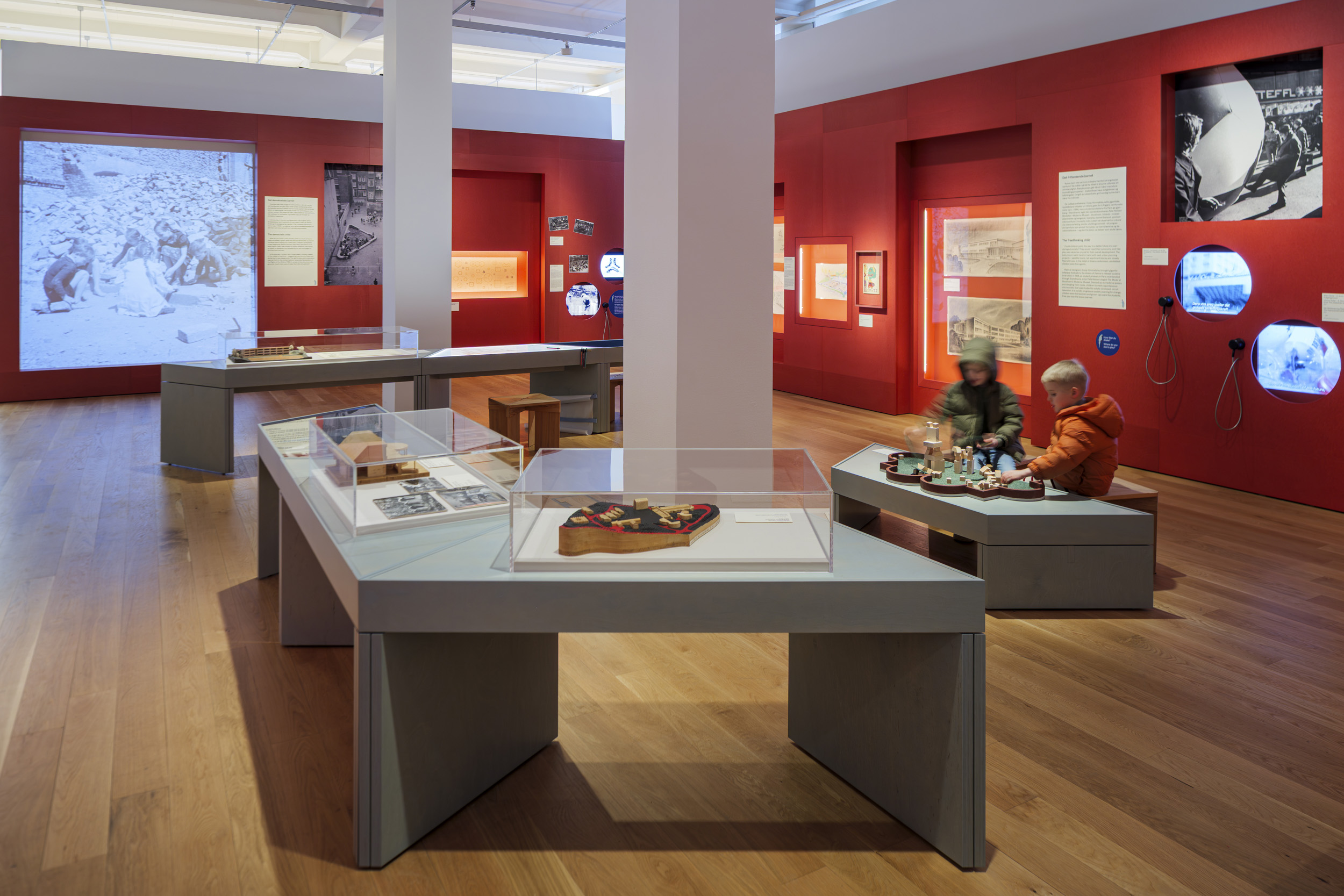
First design principles were then introduced, including the adaptation of normal exhibition furniture from heights suited predominantly to adults to those more suited to children. Two intersecting design languages were then created for the display elements. First, a vertical walling system made of tactile, solid walls in stained timber (Valcromat), which would hold the majority of the display objects along the perimeter of the exhibition space. The walls have homogenous binding colours and use a device of punctures and apertures, reminiscent of doors and windows, offering moments for stopping and looking more closely. Rather than ‘framing’ content, the designers stripped content back so that pictures float like delicate sheets to show a working drawing, for example, rather than sitting in a traditional mount.
Touch is encouraged at all times, so that visitors can look and observe, but also interact and listen, rather than simply pointing at an exhibit set in glass. Colour binds each themed area and replaces more classic sequential sequencing, recognising that children are unlikely to follow a directed sequence in the same way adult visitors would.
The second strand of display in each themed area is a series of tables that are a contemporary interpretation of the chamfered-edge tables and stool seats originally designed in 1975 by renowned Norwegian architect Sverre Fehn for his famous Skådalen School for deaf children in Oslo. The tables, designed in a trapezoid shape to ensure visual interest and permit interesting multiple configurations, hold the majority of the interactives and create a language of immersive play and fun.
The vibrant colour choices and the materiality of the exhibition were also informed by the advance workshops with local children, utilising the bright tones and tactile feel the children were repeatedly drawn to. The colour choices were also informed by the post-war era and the preferred palettes of that period, consciously evoking a sense of nostalgia in older visitors.
Exhibition Themes:
The first theme of the exhibition is ‘Starting Over’, which examines the post-war construction and re-construction period. Visitors are asked what they would expect to see in a classroom and are introduced to basic design principles, such as considering how to let in natural light. The wall display introduces the language of circular apertures, giving a view into another world, whilst square apertures hold objects. A playground interactive also explores how best to create an inner-city play area.
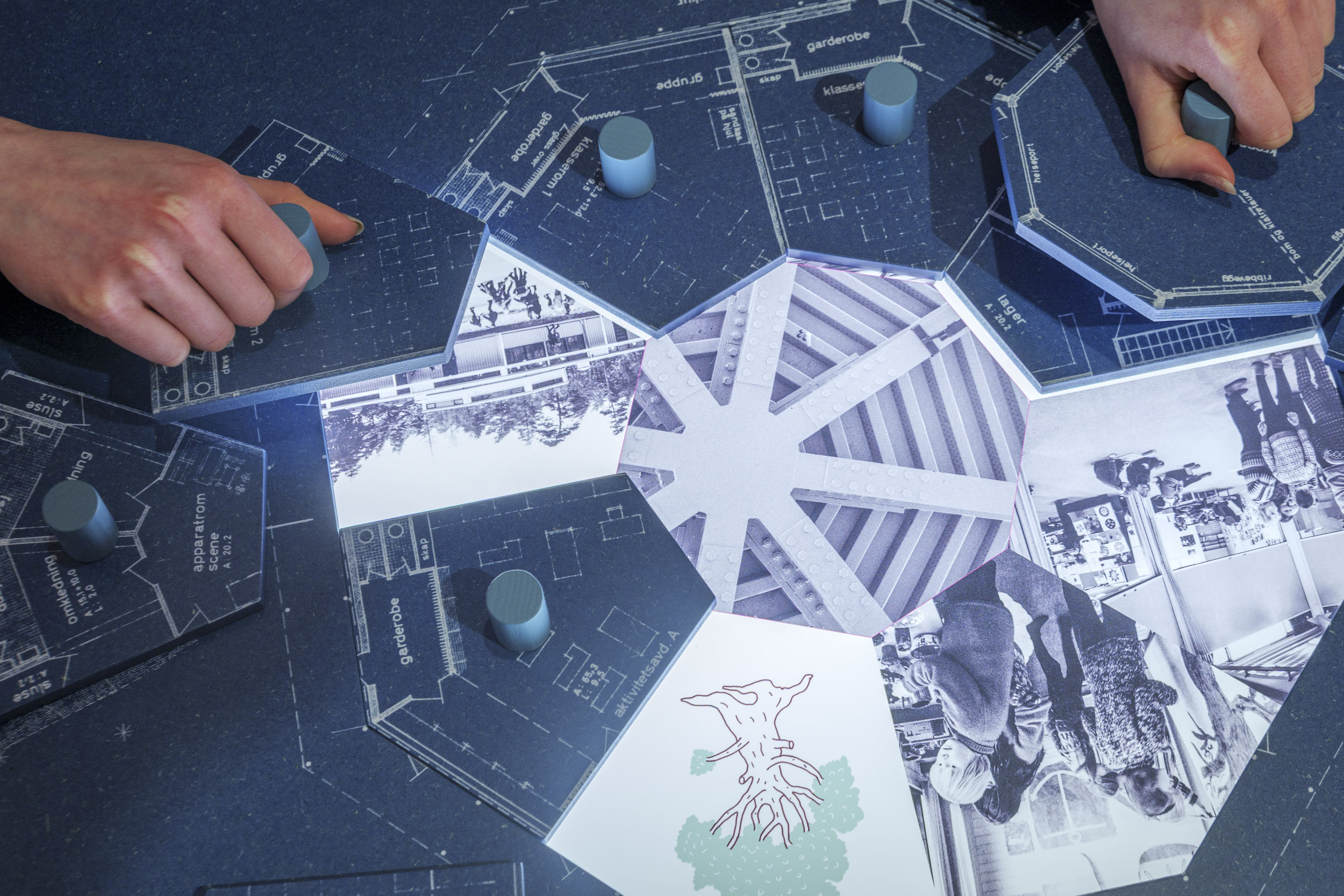
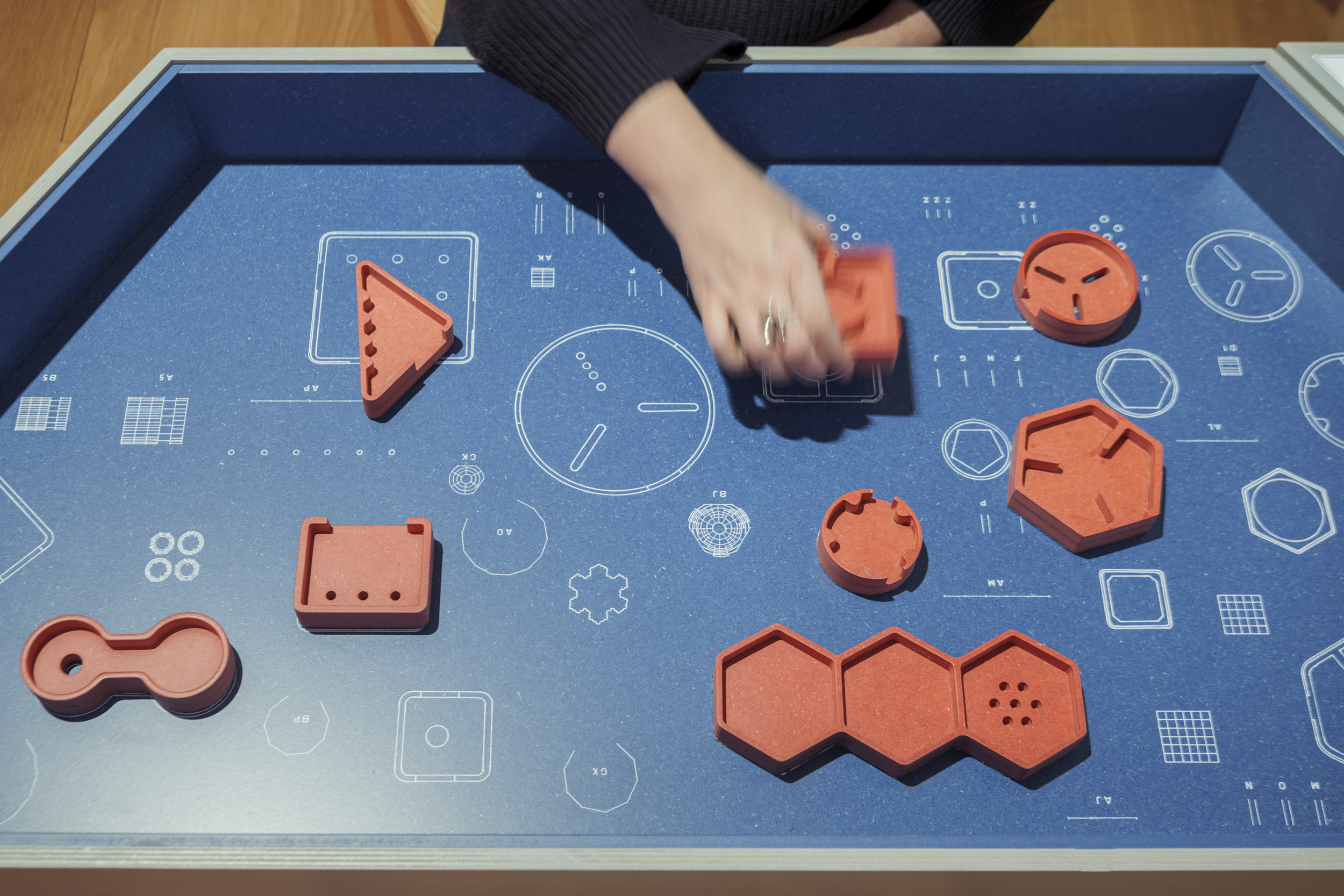
The second themed area is ‘The Radical Child’ and looks at the birth of new, avant-garde architecture and new materials to play with and explore, including a demi-dome tent set into the perimeter wall, which kids can sit inside, exploring the arrival of plastics and the changes they brought. An interactive puzzle table shows visitors how to engage with plan drawings, with a school made up of puzzle pieces representing each room and offering a reveal of each space with further information directly below.
The third theme is ‘Psychology and Health’, which considers different school typologies, including those designed for children with hearing or seeing impairment, and how such schools demanded new types of architecture responding to these needs. A routed touch plan investigates the positive and negative use of space.
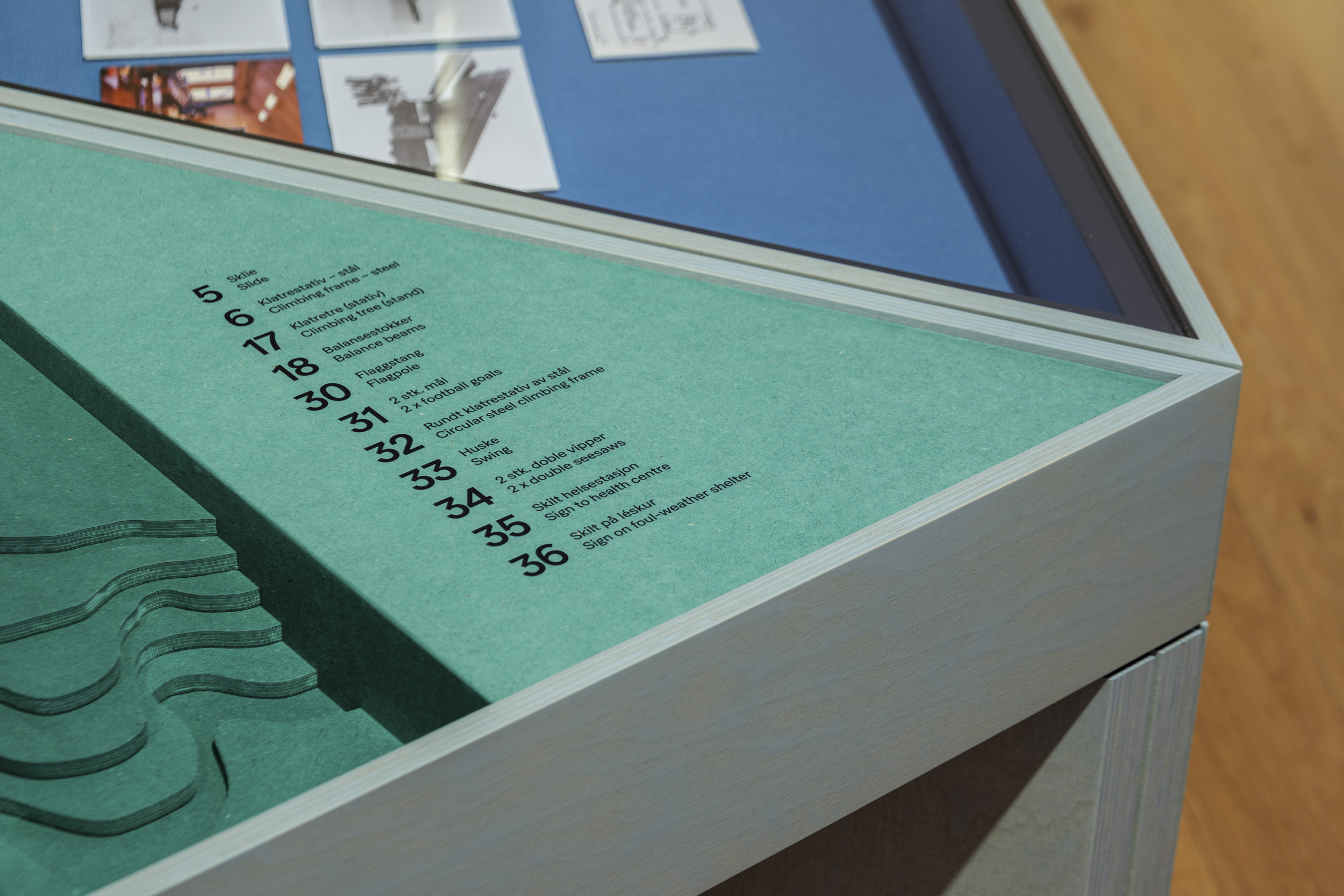
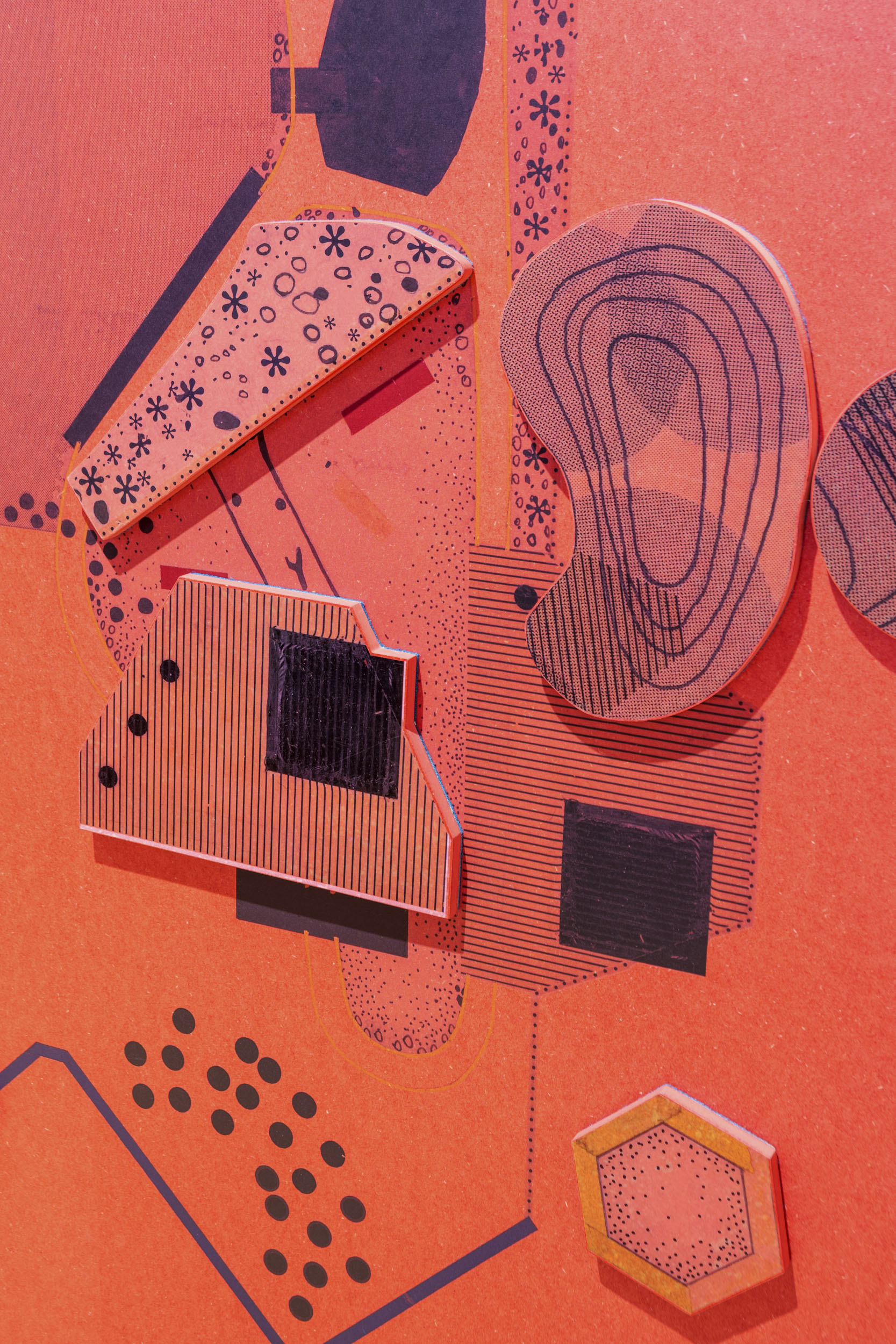
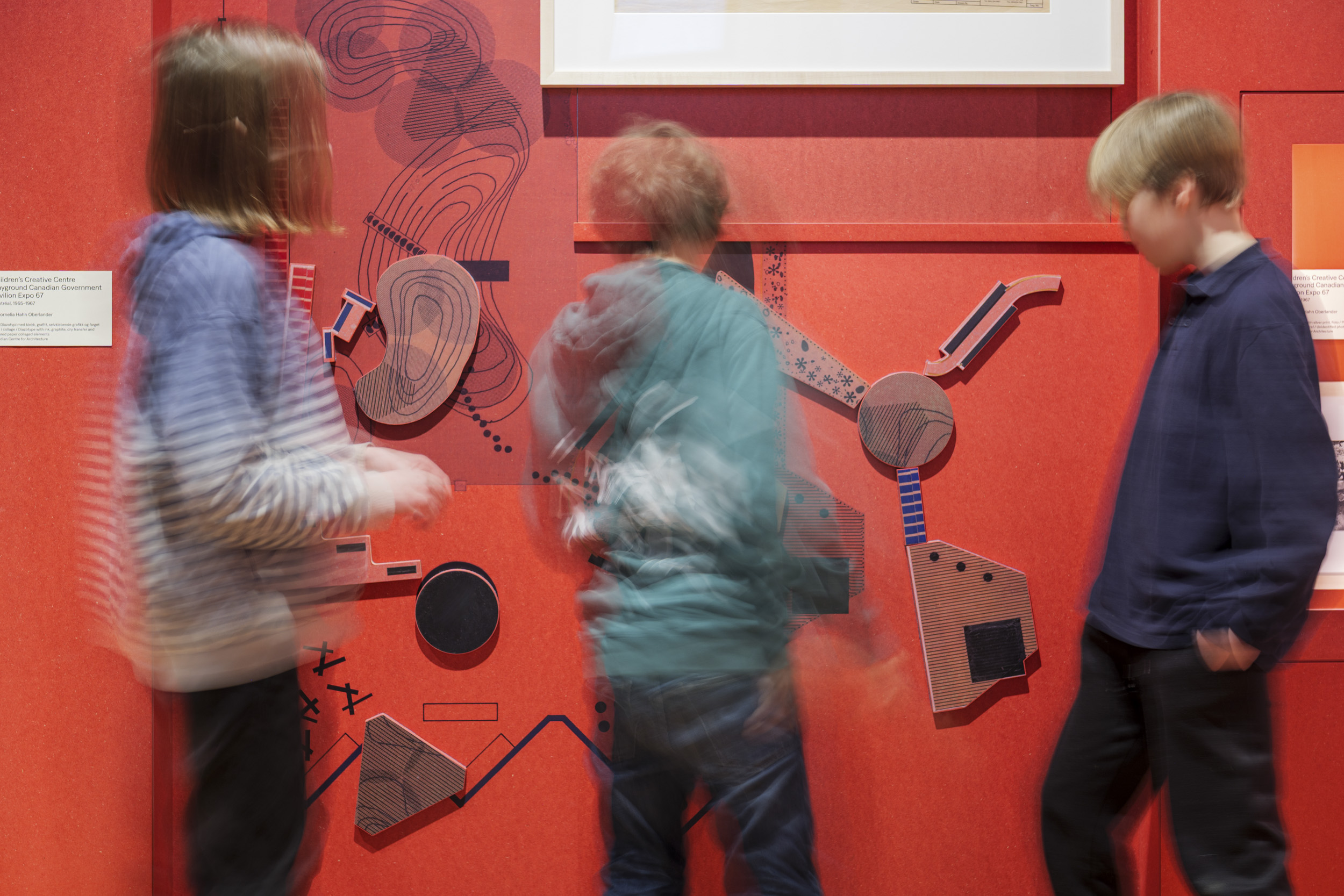
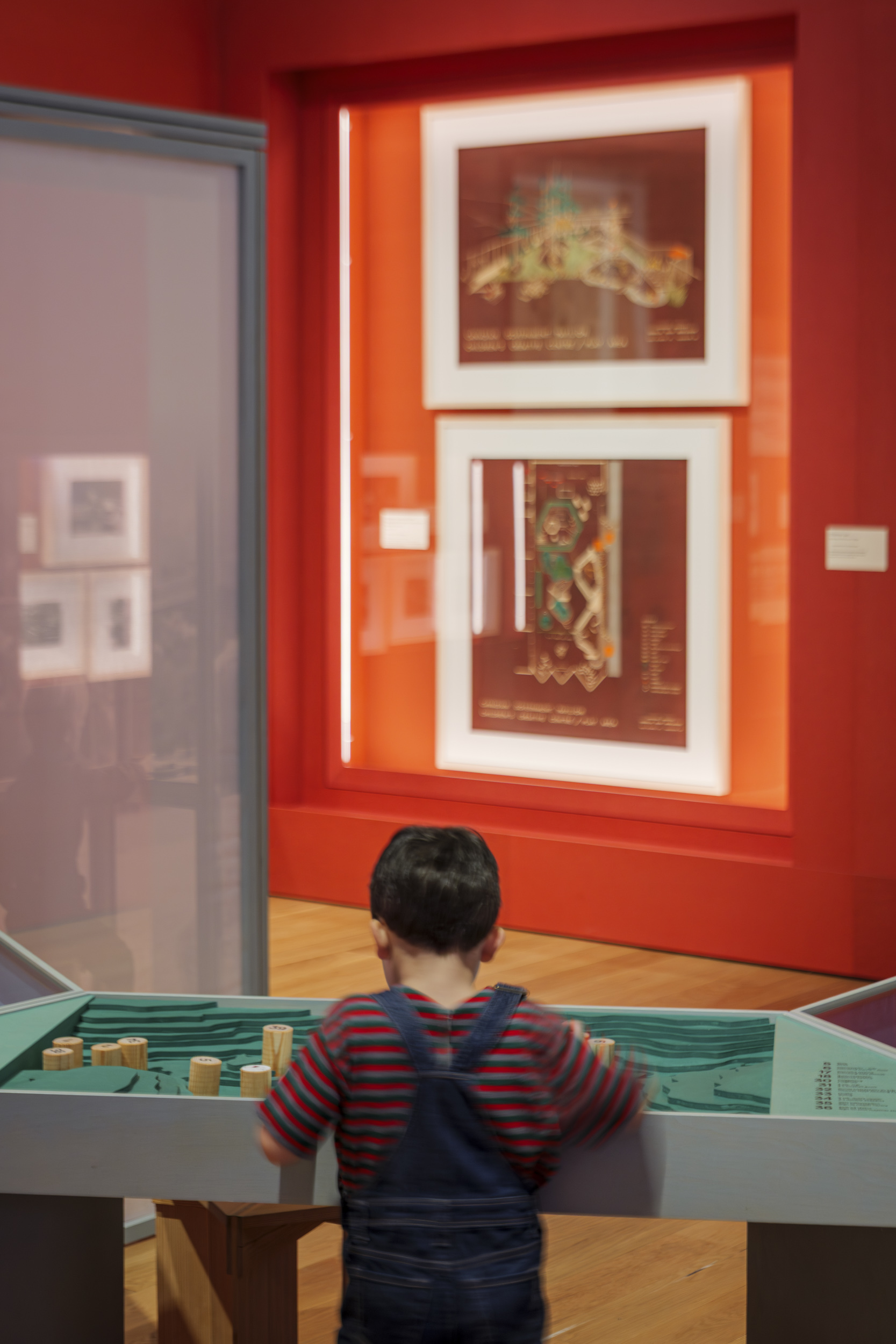
The fourth and final themed area is ‘The Nature Child’, featuring architectural shapes that focus on the outdoors and nature. An immersive threshold includes a large-scale graphic of one of the plans, scaled for a child to experience 1-to-1 engagement. A puzzle table with a lightbox beneath shows architecture at masterplan scale, with a 3D-routed landscape, where each puzzle block represents a key within a drawing showing where playground pieces are located. As visitors lift a numbered piece, the relevant grid representation can be seen for, for example, a seesaw. On the wall in this area, a scaled recreation of a diagram by renowned Canadian landscape artist Cornelia Oberlander contains 3D magnetic puzzle pieces for players to match to the diagram or else to create their own layout.
Additional spaces:
The exhibition is complemented by a series of additional installations, including two scaled-up architectural fragments, which create an introductory threshold into the exhibition; a series of longer-form film installations in the building’s vaults (the building was originally a bank and the vault area genuinely functioned as a bank vault) and which has differentiated adult- and child-focused content in different corners; plus a textile play installation by Studio Ossidiana which children were encouraged to rearrange, offering them agency over the control of their own play-space.
The Design Process
Photography: Gareth Gardner
Client: National Museum – Architecture, Norway
Exhibition Design: Nissen Richards Studio
Build Contractor: Treverkstedet + Nasjonalmuseet In-house Team
‘Soft Village’ Installation Designer: Studio Ossidiana
Nissen Richards Studio was established in 2010. We are a multi-disciplinary design practice that specialises in architecture, exhibition, graphic and theatre design. We take great pride in our work being of the highest quality, as timeless design and using best practice. Whether this is a large scale housing project, museum refurbishment, exhibition or small-scale installations. We enjoy working between and blurring the boundaries between different disciplines, whether permanent structures or through the layering of different types of media. We enjoy each project being a partnership with our clients, creating bespoke projects that answers the brief, and enriches an experience. We create clear systems of thinking, working, and communicating - and these systems are fully integrated in the overall design process.