

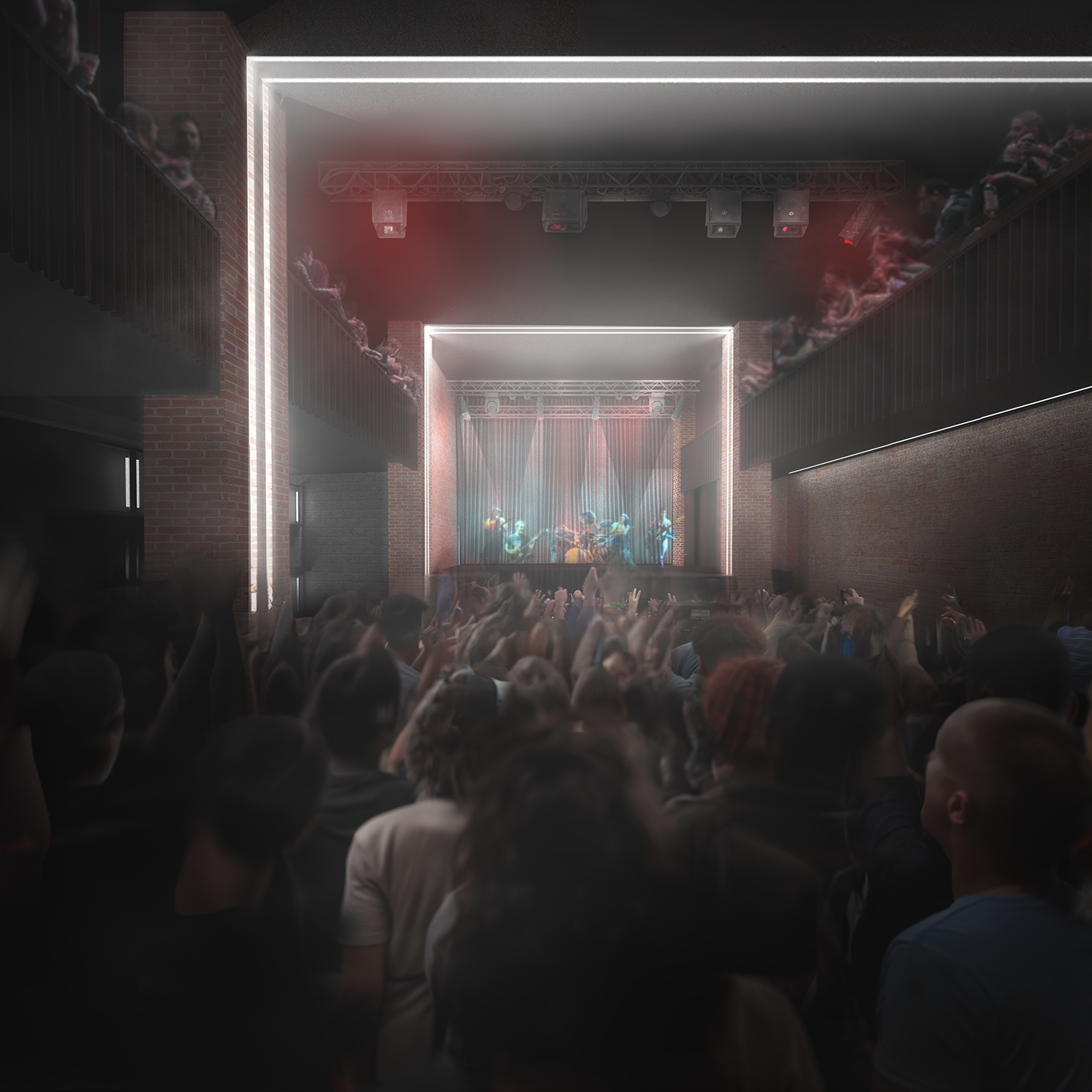
Ambitious plans to expand and refurbish legendary Cardiff grassroots music venue Clwb Ifor Bach, designed by architects Nissen Richards Studio, have been granted planning permission by Cardiff Council almost three years after the initial submission went in. The new vision for the venue, sited in a historic city centre Conservation Area, has been subject to complex legal agreements and was also the focus of a major funding drive by the club’s owners, with the venue first becoming a Registered Charity in 2019 to help further its ambitions not only to host the best in new music but to support the development of the club’s local audience, artists, skills and community.
Clwb Ifor Bach’s importance in the Welsh music scene can’t be overstated, having helped launch the careers of many big-name Welsh bands, from Stereophonics to Super Furry Animals. The new designs by Nissen Richards Studio seek above all to retain Clwb Ifor Bach’s character, charm and heritage, whilst modernising and future-proofing it for generations to come, to ensure it is a fully-accessible venue, welcoming to all.
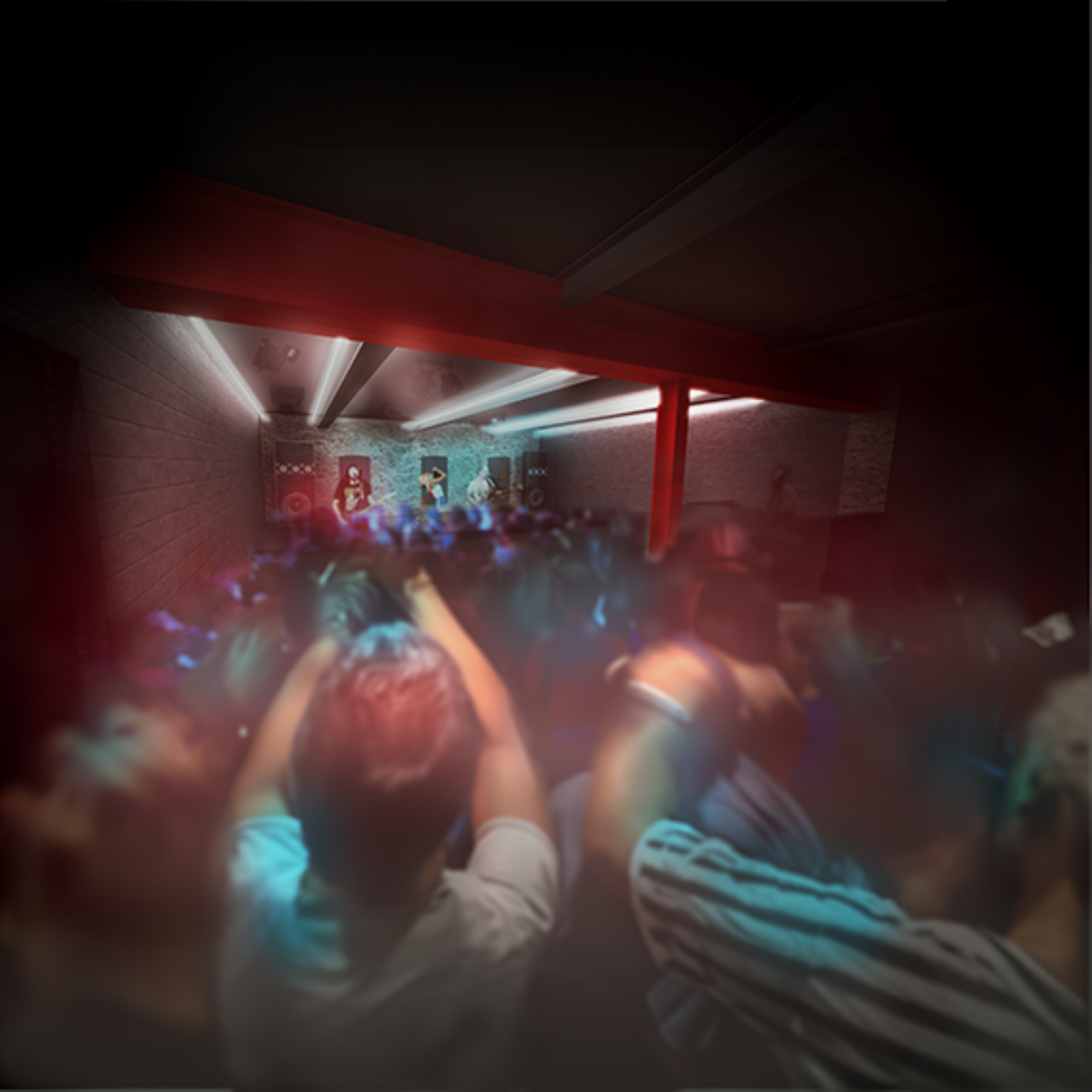
The revamped 1,270m² venue will also include improved facilities such as green rooms, increased toilet capacity, new bars, offices and workshops, plus increased capacity to allow for higher-profile acts. Committed to improving opportunities for younger audiences, Clwb Ifor Bach supports aspiring technicians, promoters, performers, photographers, and more. The work now goes beyond music event programming and the redevelopment will help take this to a bigger scale.
The New Proposal
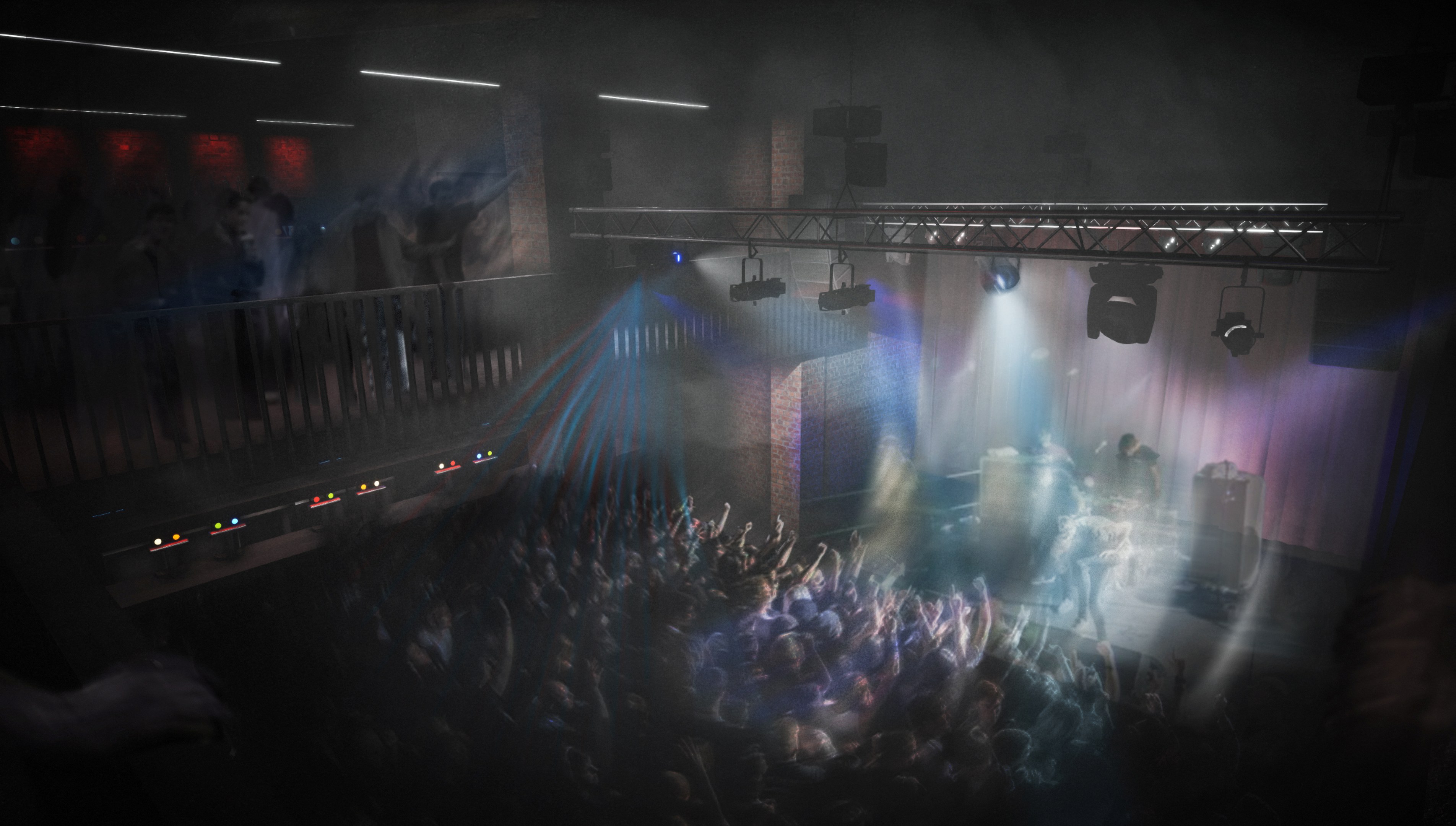
Nissen Richards Studio’s scheme proposes the removal of the site’s existing first floor and the creation of a double-height performance space, comprised of a standing area/dance floor that accommodates 375 people, plus a wrap-around mezzanine balcony, creating a total capacity of 500. The scheme will also enable two venues to operate simultaneously, with an additional 200-capacity space on the upper floor that allows for intimate live music shows, events, exhibitions and conferences, with the overall venue capable of holding up to 750 people across four floors.
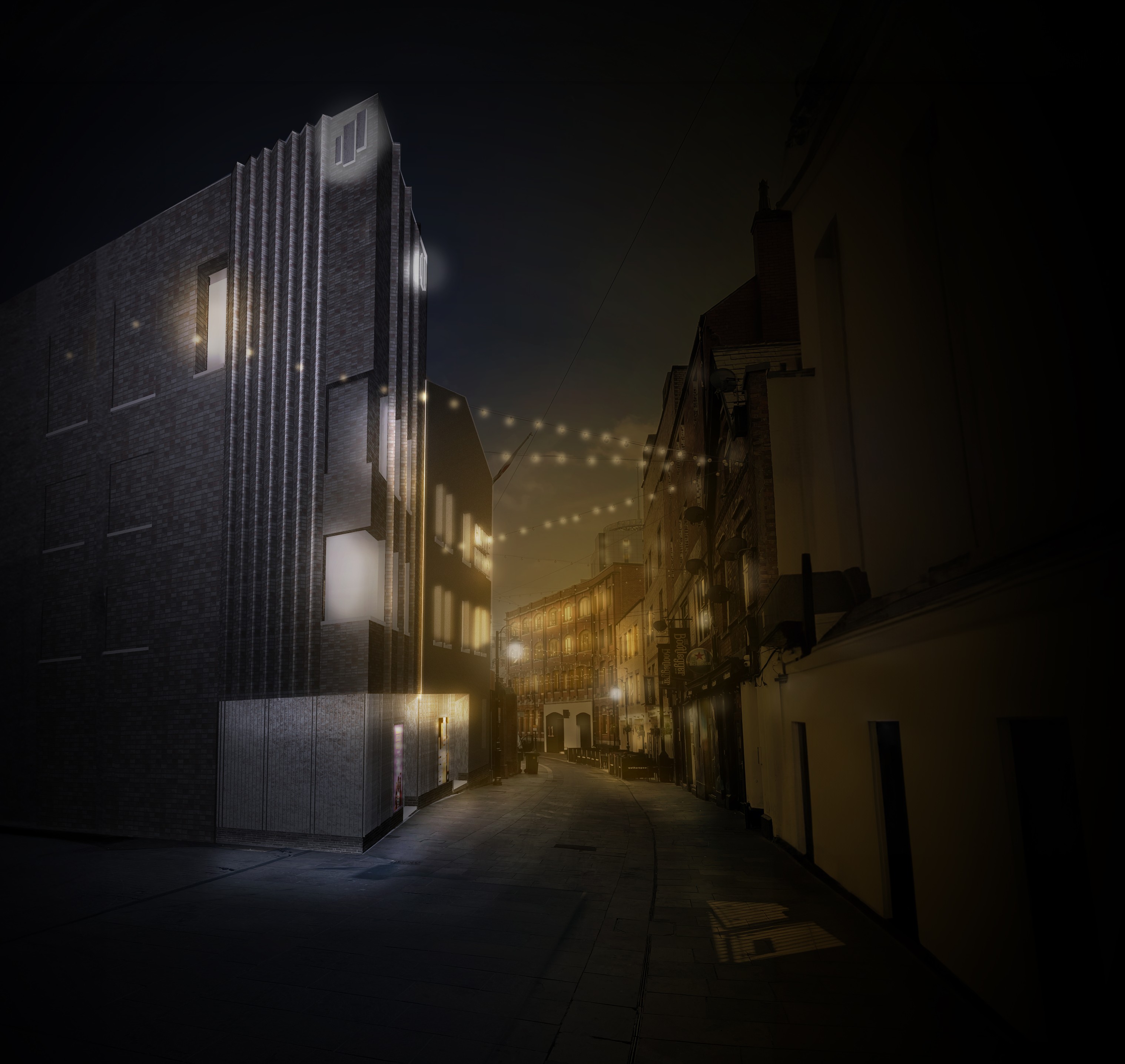
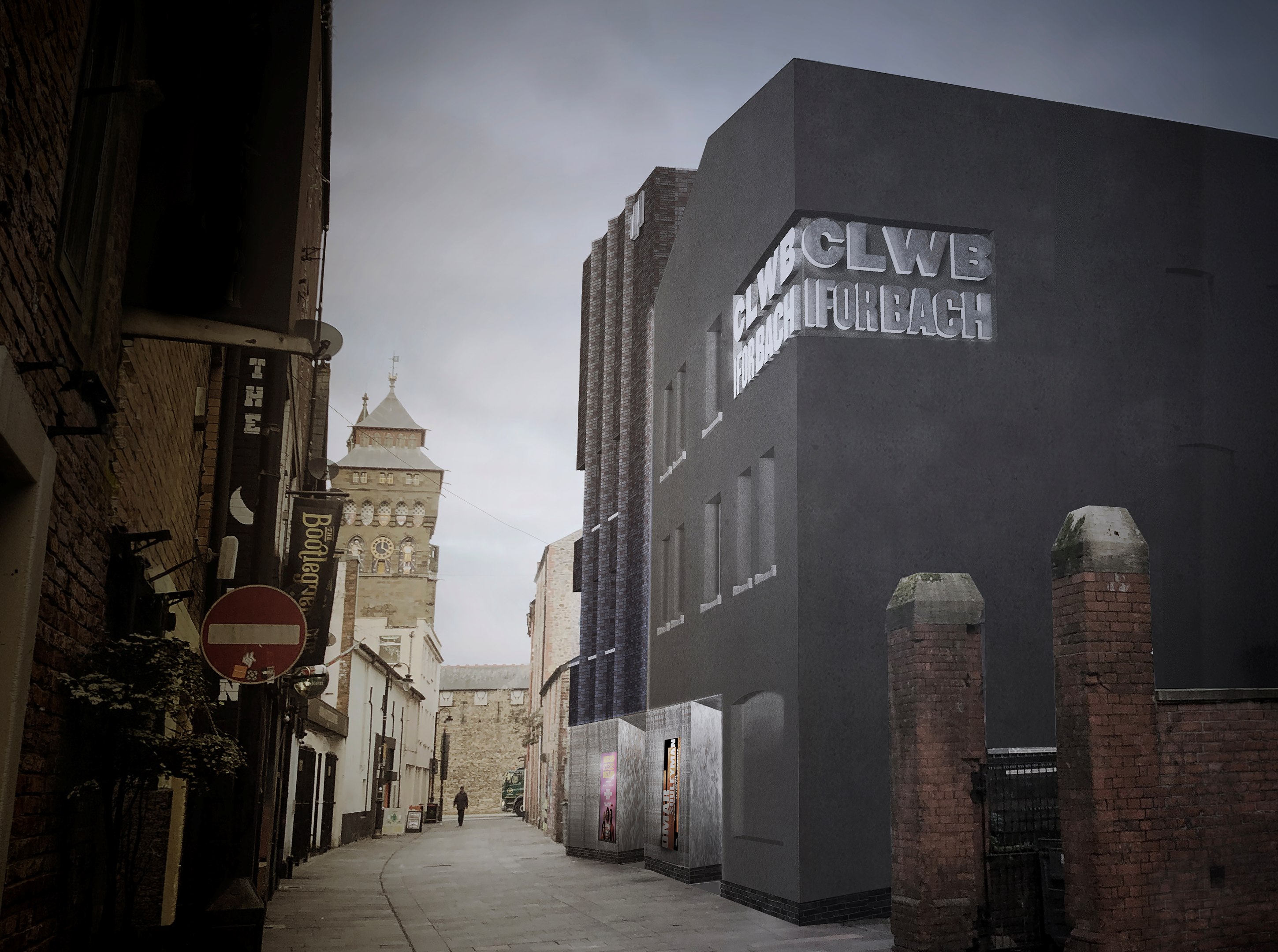
“The old and new building exteriors will have different treatments to create a sense of ‘honest drama’” Jim Richards, Director of Nissen Richards Studio explained. “The existing building will feature a textured charcoal black render, whilst the new building will feature new, fired brickwork. The new building will have a faceted front, with a thin LED strip demarcating the two buildings to create an ‘active’ frontage. Patinated, galvanised steel cladding will reach the top of the ground floor across both the old and new buildings, unifying the two.”
The architectural treatment refers to the local city architectural vernacular, from Cardiff Castle and the semi-glazed bricks of the Victorian terraces to the local Art Deco cinema’s render. The new building’s faceted front features a slightly abstracted look facing in the direction of the castle, with its verticality more pronounced from the other direction. The verticality reflects the Art Deco influences, but with a more industrial feel that’s right for the venue.
“We are implementing a ‘fabric first’ approach to this project, with intelligent systems, including dramatically improved thermal and acoustic performance and MVHR recovery systems” Jim Richards added. “In terms of look and feel, whilst refurbishments often try to maintain a building’s exterior whilst blitzing the interior, the inverse needed to happen here. The interior will stay raw and true with a brick, rustic feel to ensure it feels like a proper gig venue with character and soul.”
On the building’s first floor, there will also be a new cloakroom and an education room, created for use by local schools as a practice room. This space features two major glazed walls, ensuring it links to the local streetscape below. The space represents part of the venue’s commitment to having more varied activities going on at different times of the day and night.
The upper floor will be significantly upgraded with a new bar and better acoustics in the form of acoustic window shutters, as well as better toilets, band rooms and offices. The proposed roof terrace plan includes a covered bar space overlooking the castle from the windows, as well as a retractable roof terrace canopy and smoking area.
At the front, there will be a main and a secondary entrance, which also serves as a fire escape. A backlit AV screen will be located where the main entrance used to be. The venue’s new identity, designed by Nissen Richards Studio, features twice on the new exterior, recessed into the exterior wall of the reclad existing building. It will face in two directions, each with a different treatment, referring to the two different exterior treatments. The front-facing identity will be in frosted, backlit glass, whilst the side-facing one will be in patinated steel. The logo ‘marque’, which features on the new building fascia, will also be in patinated steel.
Clwb Ifor Bach Chief Executive Guto Brychan said: “We’d like to extend our gratitude to Cardiff Council for their help in securing the premises next door, which was a key factor in progressing the plans. Our plans to improve Clwb Ifor Bach for the artists and audiences of the future will be a cornerstone of the city’s live music infrastructure for years to come.
The venue won’t just build on our heritage, it will contribute to our community, to the Welsh economy and to the fabric of Welsh life. And it will play a critical role in making Cardiff an internationally recognised music city, the capital of a country that’s synonymous with song. It’s time to give music in Wales a new home.”
Nissen Richards Studio was established in 2010. We are a multi-disciplinary design practice that specialises in architecture, exhibition, graphic and theatre design. We take great pride in our work being of the highest quality, as timeless design and using best practice. Whether this is a large scale housing project, museum refurbishment, exhibition or small-scale installations. We enjoy working between and blurring the boundaries between different disciplines, whether permanent structures or through the layering of different types of media. We enjoy each project being a partnership with our clients, creating bespoke projects that answers the brief, and enriches an experience. We create clear systems of thinking, working, and communicating - and these systems are fully integrated in the overall design process.